High Water in Randaberg

By Endre Harvold Kvangraven, PhD Candidate in Environmental Humanities, University of Stavanger

Klikk her for å lese på norsk

Songbirds are gathered by the boat house at the edge of Tungevika – tree sparrow, house sparrow and linnet – but their colorful plumages look faded and worn. Breeding season is over, and they’re beginning to moult. Starlings, meadow pipits and white wagtails are scattered across the surrounding lawn, while barn swallows perch in a flock by the pier. Every now and then, one or another of them sallies out over the water, catching insects mid-air.

It’s August 20th, autumn migration has begun, and at Tungenes the shoreline is crawling with dunlin. They’re widely scattered, well-camouflaged and constantly in motion, hard to count, but there must be at least a hundred of them, a jumble of dunlin with common ringed plover, common redshank and ruddy turnstone tossed in. At Holmaviga, I spot a golden plover among them, and recall seeing a pair of golden plovers in this precise location the last time I was here, in late April. Then they would have been migrating north, now they’re headed south again.
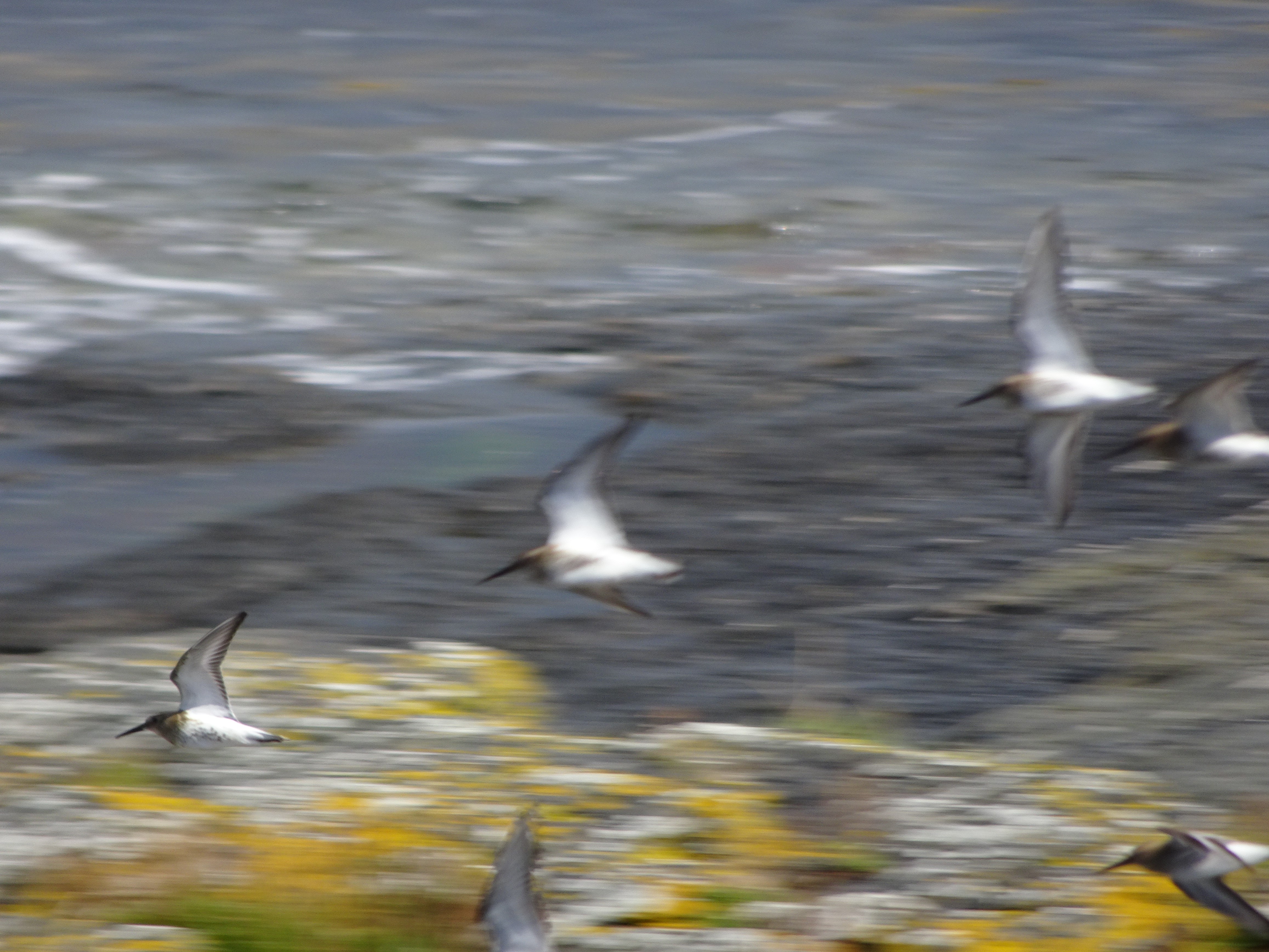
Dunlin in flight
Dunlin in flight (c) Endre Harvold Kvangraven

It’s a tranquil scene, a variety of waders feeding side by side, but suddenly one and all take wing, as if startled by gunshot, and the rocks are swept clean of birds. The peregrine flashes into view, sets its sights on a flock of common ringed plover that it chases across the fields towards the lighthouse. It appears to be gaining on them, but reemerges empty-handed, alighting on a rock that pokes up from the grass. I’ve seen adult peregrines in this area, but with lateral chest stripes and a faint tinge of tawny-red, this one is juvenile, an inexperienced hunter.
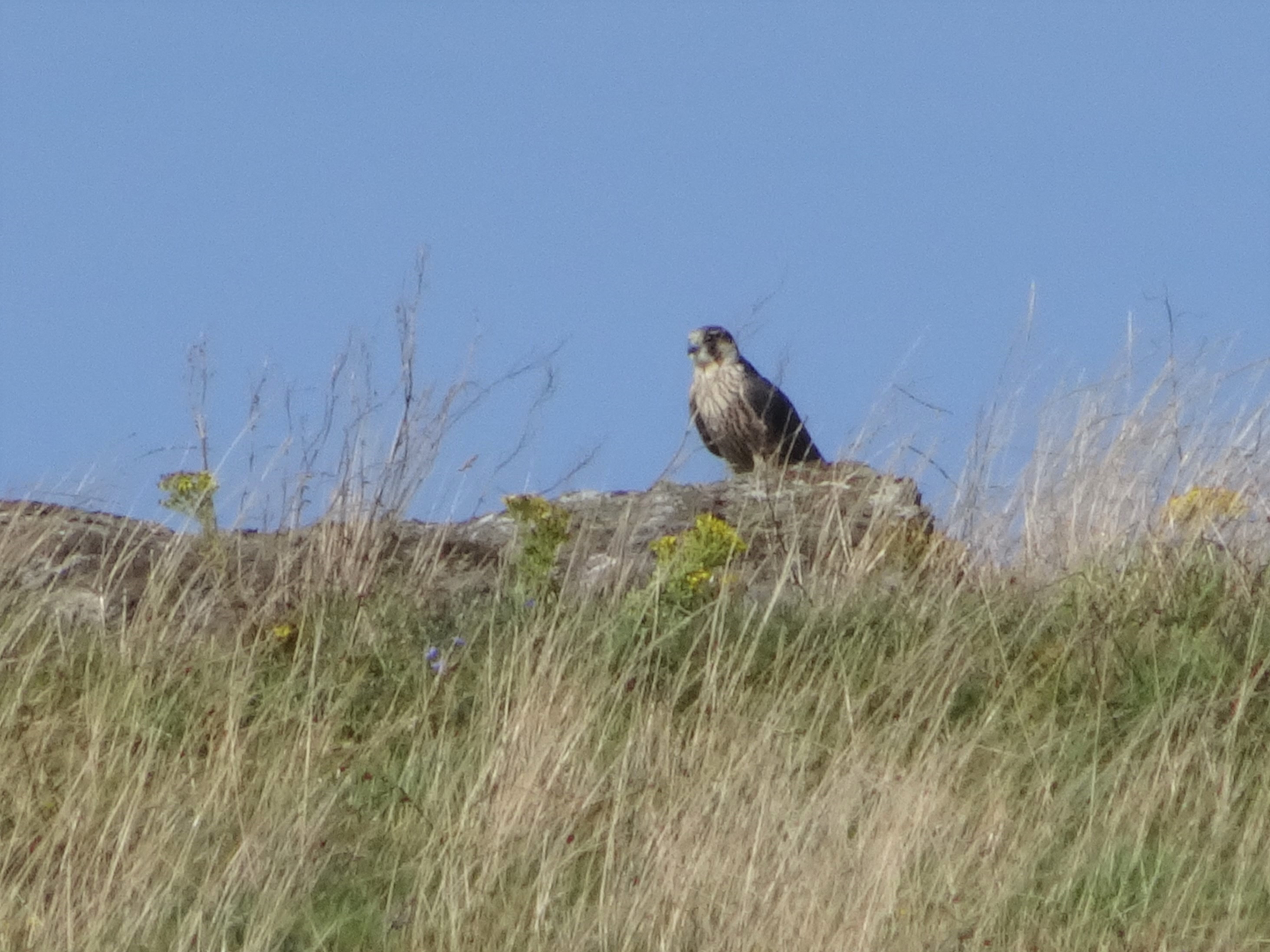
A juvenile peregrine falcon sitting on a rock
A juvenile peregrine falcon (c) Endre Harvold Kvangraven

Again I’m reminded of J. A. Baker’s The Peregrine, a book that has accompanied me up and down the coast of Jæren, where he observes peregrines hunting dunlin and other waders along the Essex coast during the 1960s. Parallels are easily drawn between the English countryside and the rural landscapes of Jæren in south-west Norway, where intensive agriculture has led to drastic ecological changes. Many of the species Baker encounters, such as lapwing and curlew, are in fact characteristic of Jæren, but their populations are now in steep decline in Norway and England alike.

Soon, the peregrine is back on its wings, rising on choppy gusts of wind and sailing off. Will it stoop? No, it continues southward and upward, becomes a distant speck of ash against the sky, only visible through the binos, then gone.

On Sandestranda, a bar-tailed godwit is poking for worms in the sand. It flies up at my approach, lands further up ahead, then turns around and flies back the length of the beach, landing behind me where it continues its hunt. A common sandpiper flutters out over the water, sounding its high-pitched alarm call as it circles back to shore past mew gulls and lesser black-backed gulls. Alongside a flock of eighty or so mallards, a red-breasted merganser leads her brood of eleven young. At Bø harbor, a grey heron flies overhead while a pair of mute swans keep watch over their four cygnets.

The tide has come in, and the inlet at Børaunen is bigger than I’ve seen it before, almost merging with the surrounding ocean, from which it is separated by a narrow ridge tracing a vague semi-circle. Curlews take to the air, their plaintive whistles carried on the wind, while a great black-backed gull shouts coarsely. The inlet holds eiders, oystercatchers, cormorants and common shelducks, while flocks of starling follow the sheep on a nearby field.

Børaunen at high tide
Børaunen at high tide (c) Endre Harvold Kvangraven

A gannet looks out of place lying on a rock at the water’s edge, and I immediately suspect avian influenza. It watches with a razor-sharp eye as I approach, but only when I’m three or four metres away does it raise its head, stabbing at the air towards me with its dagger-like bill while emitting a low, angry, rumbling sound. Up close, a gannet is an awesome sight, feathers shiny white, eyes ocean blue, bill massive, its powerfully-built neck perfectly adapted for diving into water from great heights. Eventually it rises to its feet, stumbles down to the next rock and slips itself into the water. A wave slaps it against the shore, but it swims a little further out. For a moment it spreads its wings and flaps them, but is clearly in no state to fly and remains bobbing on the waves. I report it in Artsobservasjoner and notify the Norwegian Food Safety Authority, which is responsible for handling the avian influenza outbreak, but there’s little else that can be done.

Further south along the shore, past Bøstranda, there are still plenty of dunlin and common ringed plover, the occasional sanderling, some ruddy turnstones, a common snipe flushed on a hillside just north of Einarvika. I look up and the peregrine locks me in its gaze again, now perched on a boulder looking out over the kelp-strewn sands of Molviga and the stone burial mound on the hill above. It takes wing, traces a sweeping arc down through the bay and up again, leaving behind it a trail of fleeing waders as it disappears into the farmland.

References:

Baker, J. A. 1967. The Peregrine. New York Review of Books.
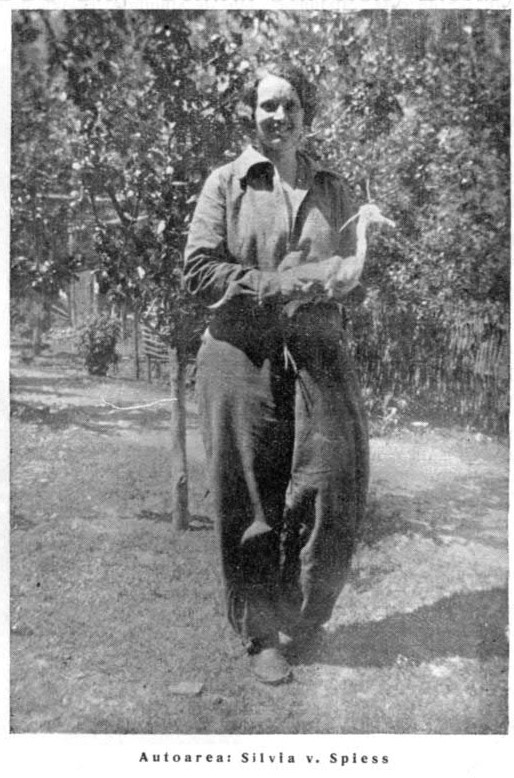
Silvia Stein von Spiess (1901-1993) – Ringing and early citizen science in 1930s Romania

By Ágota Ábrán, post-doctoral researcher at New Europe College

In 1934, Silvia von Spiess, head of the ornithological section of the Royal Hunting Office of Romania, wrote the following in an article about looking for bird’s nests in the Danube Delta to ring chicks in the hunting magazine ‘Carpații’ (Carpathians):

‘The journey is interrupted in Bucharest, and after running through the hot streets – arrangements, shopping, preparatory business – it is a real recreation to have lunch in the cool, welcoming house of the English Ambassador. My visit to Bucharest was unexpected, and I am about to show you its reason: It is the best time for ringing passerine chicks, which have not yet left their nests, and so my father and I set out to survey the bird-rich lands, to mark with numbered and addressed aluminium rings some rare birds, – as is done in all countries, in the service of studying the passage of migratory birds.

Silvia v. Spiess in Carpații, 1934

My father has already left: he is searching the rocky valleys of Dobrogea for young birds of prey – hawks, eagles, owls, etc. – while I intend to go deeper into the wildernesses of the lower Danube to perform my duties as an ornithologist there in the colonies of herons. My plan arouses great interest, especially in the Ambassador’s wife, and I can only reply, with all my heart, “Come with me!”

Each wearing a sports suit, buttoned up, against the plague of mosquitoes – a wide hat to protect from the sun, food and quinine … we both set off for the adventures, which await us.” (Carpații, 1934, No. 10, p. 253)

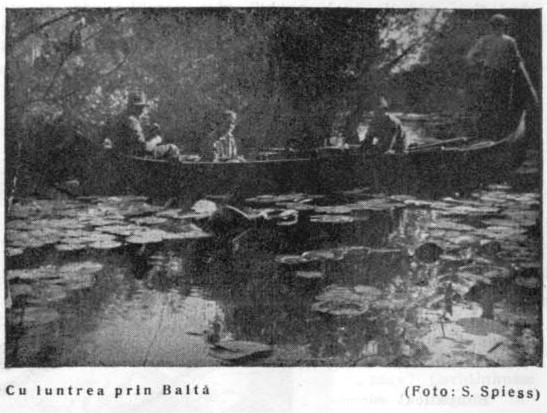
With boat through the swamp, photo by Silvia Spiess, Carpații, 1934

I was fascinated and excited to imagine these two women having their adventures in the 1930s in the Danube Delta, ringing chicks.

Silvia Stein von Spiess was born in 1901 in Sibiu as the first daughter of the Austro-Hungarian officer of Bavarian origin, August von Spiess. August von Spiess was the director and master of the Romanian Royal Hunting Office in the 1930s. Silvia had a childhood surrounded by wild animals not only through hunting but also animals raised in the garden of the house (bear cubs, wolf, wild boar), and she took part in the care of eagles and vultures in the household. Silvia became interested in ornithology and researched bird migration and the avifauna of the lower Danube Delta. In 1929 she became a member of the German Ornithological Society (DOG) and corresponded with leading ornithologists of the time. She met and remained in good relations with Romanian ornithologists throughout her life, among them Ion Cătuneanu, who was to organize and lead the Romanian Ornithological Centre (1939-1970). She was the head of the ornithological section of the Royal Hunting Office until 1937 and published in national and international specialist journals.

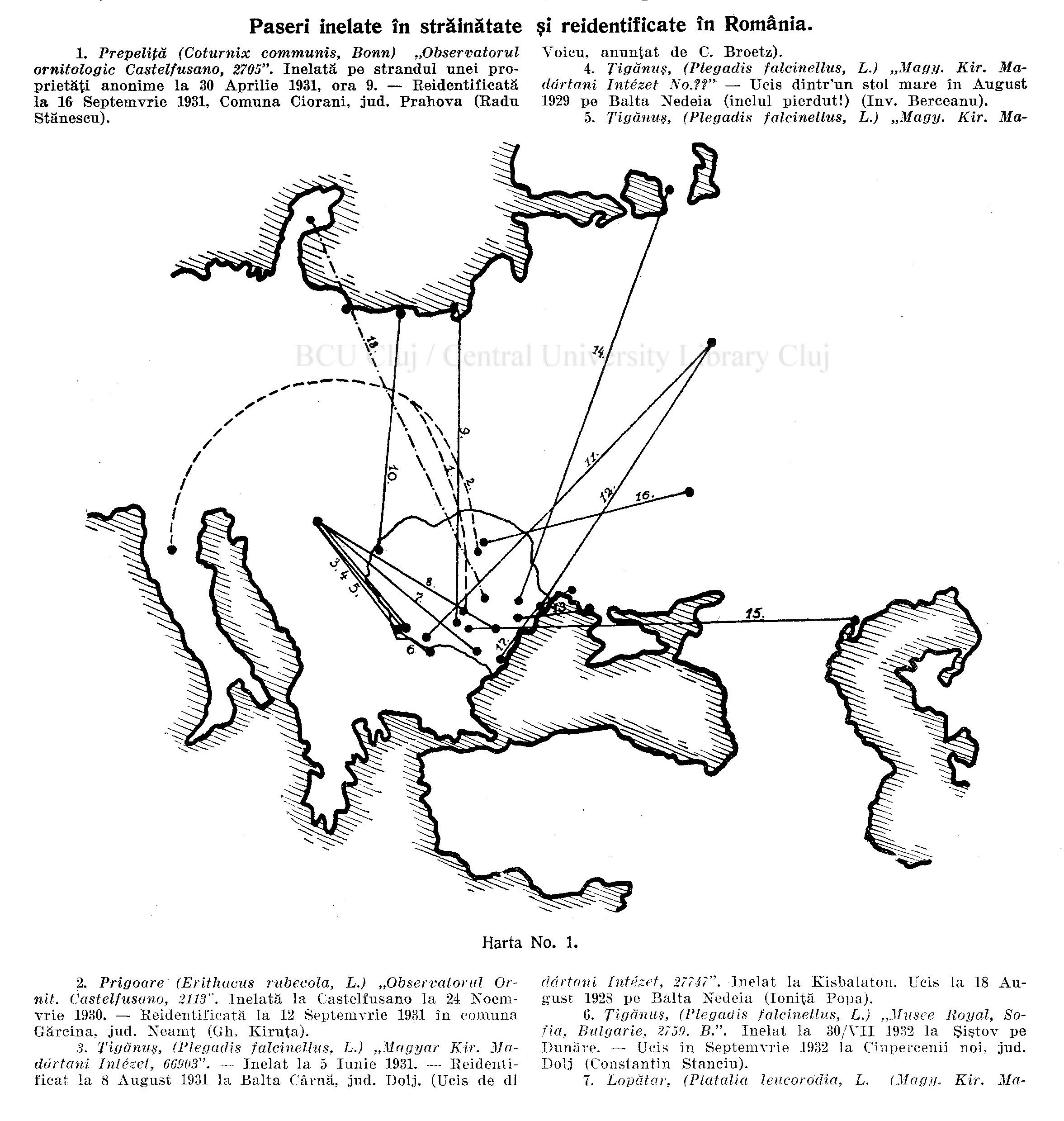
Birds ringed abroad and reidentified in Romania, map, Carpații, 1933

In the 1930s, in addition to specialist publications, however, Silvia was a frequent writer for the hunting magazine ‘Carpații’, founded in Cluj in 1933. Here, together with other ornithologists and bird enthusiasts, Silvia urged hunters to help the science of ornithology by reporting migratory and ringed birds and disseminated scientific knowledge about birds through articles written in the magazine. In April 1933, she wrote an article about ringed birds in Romania, explaining:

“One of the most important means of ornithological research is the ringing of birds, in order to determine their flight paths. But what is the use of putting rings on the feet of tens of thousands of birds every year if hunters, to a large extent, do not know that they have a duty to science: to report the captured or shot bird to the address printed on the ring. This is why it is necessary to spread active propaganda to clarify the situation. We owe thanks to some hunters with an interest in science, that in recent years we have been able to collect a number of sightings, which make it possible to note on paper the path of some birds, as is done very intensively in other countries of culture.” (Carpații, 1933, No. 04, p. 21) Thus, the hunting journal ‘Carpații’ becomes a kind of reporting and communication agent between ornithologists, bird enthusiasts and other hunters discussing diverse issues relating to birds, such as migration, the protection of some birds, as well as the correct identification of certain species, the reporting of rings on shot birds, the reporting of the first migratory individuals in spring, or other interesting stories relating to the behaviour of birds.

Linnud ja sõda

Elle-Mari Talivee, Eesti Teaduste Akadeemia Underi ja Tuglase Kirjanduskeskuse vanemteadur, PhD

Click here to read in English

Selle aasta volbriööl võtsin esimest korda osa kodanikuteaduse (e harrastusteaduse) projektist, mis loendab Eestis aasta linnuks valitud metskurvitsaid ehk neppe. Loendust teha on kerge: metskurvitsa isaslinnud lendavad iseloomulikult krooksudes otsejoones üle lagendike või metsasihtide ning loendajal tuleb lennud kindlaksmääratud ajaperioodil lihtsalt kokku lugeda. Mu ema maja asub metsade keskel väikesel niidul ning metskurvitsate lennud ja häälitsused on seal alati olnud kevadiste lõkkeõhtute osa. Saime üles märkida 15 kurvitsalendu, enne kui linnud taeva sel ööl nõidadele jätsid.

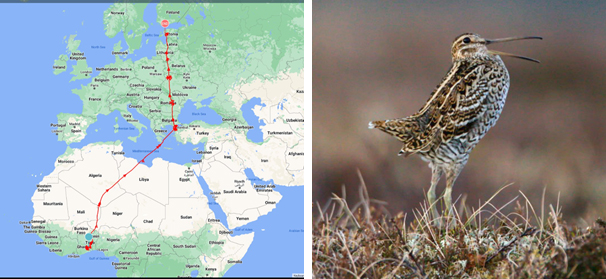
Mõni päev varem olin märganud teadet teise, metskurvitsale välimuselt sarnase, aga väga haruldase kahlaja naasmise kohta Eestisse. 26. aprillil jõudis Ghanast koju tagasi rohunepp Tuljak (nime on ta saanud mitte hästituntud rahvatantsu, vaid niisama hea kommisordi järgi). Tuljak kannab seljas saatjat ja kaardilt sai vaadata tema 20-päevaga kaetud 7000 kilomeetrit pikkust koduteed. Tuljaku-isand tegi teel mõned peatused, ühe pikema Türgis ning mõned lühemad Rumeenias, Ukrainas ja Leedus. Kotkaklubi kaardirakenduselt on võimalik jälgida mitmete GPS-saatjatega rändlindude teekondi: seal on must-toonekurgi, sookurgi ja mitmeid kotkaliike. Rändlinnud rändavad sageli öösiti ja paratamatult pidin mõtlema, mida Tuljak või teised koju tulnud kaugrändurid võisid arvata sõjatulede kohta, kui Venemaa pommitab Ukrainat.

Rohunepp Tuljaku kodutee; rohunepp näeb välja selline (wikimedia, CC0 1.0)

Need linnud jõudsid kodumaale vigastamatult. Genotsiid, mida Venemaa Ukrainas teostab (ja mis iga päevaga õnneks aina enam läbi kukub) on mõjunud hävitavalt ka keskkonnale ja looduslikule mitmekesisusele. Kui Venemaa 2014. aastal Donbassis sõda alustas, tõi see kaasa metsatulekahjud. Aasovi mere ääres asuv 2009. aastal asutatud ja mitmeid haruldasi veelinde kaitsev Meotõda rahvuspark on relvakonfliktides pikalt kannatanud. Selle aasta märtsis süütasid lahingud Hersoni lähedal Musta mere biosfääri kaitsealal loomade ja lindude elupaiku. Need on vaid mõned näited.

Üks sõjaajakirjanik kirjutas mais 2022:
„Kui rindele lähemale jõudsime, hakkasime vingerdama mööda auklikke teid. Dima ütles, et just praegu käib äge lahing. Takerdume kahe meie ees paterdava faasani taha. „Nad on täiesti kurdid,“ ütles ta. „Pommitamine on nende trummikiled purustanud. Me võime terve päeva siin hõikuda, aga need siin ei kuule midagi.“[1]

Kirjeldatud kogemus tõi mulle meelde lindude kirjeldused Esimesest maailmasõjast, mille on raamatukaante vahele kogunud šoti ornitoloog Hugh Gladstone pealkirja all Birds and the War („Sõda ja linnud“, 1919). Gladstone otsis uudiseid ja märkusi lindude käitumise kohta sõjas: mõned neist räägivad õhuhäirete ja pommide tagajärjel kurdistunud tiivulistest, surnud kanepilindudest, kelle trummikiled olid purud, aga ka neist, kes harjusid kahuritulega ja kasutasid ära eikellegimaa ebanormaalset putukaterohkust, pesitsedes mürsukestades. Mõned linnud leidsid vana asemel uue pesapaiga: „Pääsukesed lendasid ümber varemekuhjade, mis olid jäänukid nende endisest kodudest, ning kulus päevi, enne kui nad olukorraga leppisid ja tegid endale pesa purustatud müüride vastu püstitatud sõjaväerajatistesse.“ (Lk 116–117).

Sellised linnuvaatlused kirjadest, mälestustest ja ajalehtedest on otsekui kurb kodanikuteaduse vorm. Raamat tsiteerib šoti minööri, kes hiljem Läänerindel hukkus: „Kui linde poleks, misuke põrgu see kõik oleks! Vaatan, kuidas nad laulavad, ja liigutusest kerkib mulle klomp kurku.“
(Lk 134).

Sõja-Twitteris on jagatud lugusid Harkivi ökopargi lõvide ja Feldmani ökopargi loomaaia tapiiride evakueerimisest.[2] Vaprad ukrainlased mõtlevad ka oma lemmiklindudele, Aafrikast naasvatele valge-toonekurgedele, kes tulid koju sõja ajal ja hakkasid purukspommitatud katustele pesi ehitama. Olen märganud ettepanekuid ehitada neile pesade jaoks aluseid või aidata linde kunstlike pesade paigaldamisega.[3] Linnud näivad kandvat sõjas lootust.[4]

Eesti Pank annab peagi välja Ukrainale ja vabadusele pühendatud 2-eurose mündi, mille kujundas Eesti Kunstiakadeemias õppiv noor Ukraina sõjapõgenik Darja Titova. Kunstnik on õrnuse sümbolina mündil kujutanud tütarlast, kes kaitseb oma pihkude vahel pisikest lindu. Isegi sõjas.

[1] David Patrikarakos, Inside the battle on the Eastern Front. UnHerd, May 9, 2022.

[2] Kellianne Matthews, Discover the Heroic Animal Evacuations from Zoos in Ukraine. April 7, 2022.

[3] White storks return home to dangerous conditions. How can we help them? Nature Reserve Fund of Ukraine.

[4] Oleksandr Ruchko, Country diary: To Ukrainians, the storks’ return is a glimmer of hope. Guardian, April 14, 2022.

Birds and the war

By Dr Elle-Mari Talivee, Under and Tuglas Literature Centre of the Estonian Academy of Sciences

Eestikeelse postituse lugemiseks vajuta siia

On this year’s Walpurgis Night I participated for the first time in a citizen science project of counting the Eurasian woodcocks in Estonia – the bird of the year here. The count is rather easy: the males fly over clearings at dusk with a peculiar sound, performing a courtship flight known as ‘roding’, and one just needs to count the flights over a fixed period. My mom’s house in the countryside stands on a little meadow in the woods and the sounds of the woodcocks are something that have always been part of the spring evenings there while making a bonfire. I managed to record 15 woodcock flights that night before they left the sky to the witches.

A couple of days before, I had noticed that another but very rare wader (quite similar in appearance to the woodcock) had returned to Estonia. On April 26th, the great snipe called Tuljak (named after delicious chocolate sweets, not the famous folk dance) arrived back home in Estonia after wintering in Ghana. The bird is carrying a GPS-tracker, so his route (7000 km in 20 days) could be followed on the map. Mr Tuljak made some stops on his long journey, a longer one in Turkey and some shorter breaks in Romania, Ukraine and Lithuania. From the interactive map of the Estonian Eagle Club one can follow the routes of other migratory birds with trackers – black storks, common cranes, various eagles – returning North. The great snipes often travel at night and inevitably I wondered what Tuljak thought of the fires of the war, of Russia bombing Ukraine.

The great snipe Tuljak’s journey home; a great snipe (wikimedia, CC0 1.0)

Those birds were lucky to pass unharmed. The genocide Russia is trying to carry out in Ukraine (today I already hope it has totally failed) has brought along ecocide and a loss of biodiversity as well. The forests already began to burn in 2014, when Russia started the war in Donbas. The wildlife of the Meotyda National Nature Park, founded in 2009 also for rare waterbirds by the Sea of Azov close to Mariupol has suffered long from fighting in the area. In this March the battles close to Kherson caused fires in the Black Sea Biosphere Reserve with unique habitats for birds in one the largest biosphere reserves in Ukraine. These are but a few examples.

A war journalist has written about the birds close to the front in the middle of Europe in May 2022:

“As we draw closer to the front, we meander around potholed roads. Dima tells me there’s intense fighting at the moment. We get stuck behind two pheasants waddling in front of us. “They’re totally deaf,” he says. “Shelling has blown out their eardrums. We can hoot all day and they’ll never hear.””[1]

His experience reminded me of several examples from a book by the Scottish ornithologist Hugh Gladstone, Birds and the War (1919) about WWI. Gladstone collected text samples and news about birds in the war, some of them deafened by air-raids and air-craft bombs, dead linnets with their eardrums split, but also about species which got used to the cannon fire and used the abnormal quantity of insects while nesting on no-man’s land or in old shell-cases. Or found a new place to nest: ‘Swallows flew around the heaps of ruins that represented their former homes, and it was some days before they became reassured and built in the military huts constructed against the battered walls’ (p 116–117).

These observations from letters and diaries are like a tragic mode of citizen science. The book quotes a Scottish miner shortly before his death on the Western front: “If it weren’t for the birds, what a hell it would be! I watch them singing, and something comes to into my throat that makes me almost greet [‘cry’]” (p 134).

War Twitter has shared the story of the evacuation of the lions of the Kharkiv Ecopark and the tapirs from the Feldman Ecopark Zoo.[2] The brave Ukrainians have also thought about their favourite birds, the white storks returning from Africa, arriving to war, and starting to build nests on bombed-out roofs: I have noticed suggestions to construct platforms for these nests, help them with installing artificial nests.[3] The birds seem to carry hope.[4]

The bank of Estonia, Eesti Pank is going to issue a two-euro coin for Ukraine designed by a student refugee Darja Titova from the war. The designer has depicted a girl as a symbol of tenderness, protecting a little bird in her hand. Even in the war.


[1] David Patrikarakos, Inside the battle on the Eastern Front. UnHerd, May 9, 2022.

[2] Kellianne Matthews, Discover the Heroic Animal Evacuations from Zoos in Ukraine. April 7, 2022.

[3] White storks return home to dangerous conditions. How can we help them? Nature Reserve Fund of Ukraine.

[4] Oleksandr Ruchko, Country diary: To Ukrainians, the storks’ return is a glimmer of hope. Guardian, April 14, 2022.

A brief introduction to multispecies studies and ethnography (through birds)

By Claudia Câmpeanu, translated by Ágota Ábrán

(Original article in Romanian: Câmpeanu, Claudia. 2022. O scurtă introducere în studiile și etnografia multispecii. Sfertul Academic. Antropedia)

Thousands of rooks (Corvus frugilegus) spend the night in the tall trees of Cișmigiu from spring to autumn. It is unclear when they started doing this, but it is likely that their large presence is linked to the transformation of urban spaces (clearing of green areas, tree felling, expansion towards the edges) and the huge amounts of litter available in the city’s open pits. Corvids (of which rooks are a part) are intelligent, adaptable, generalist birds (they eat just about anything) with complex social structures. Their solution of roosting in the trees in Cișmigiu and indeed throughout Bucharest makes sense in this context. People complain about them – the excrement, the evening noise, or simply their too numerous existence. Their presence is clearly framed discursively as a problem, a sign of the park’s degradation, of the administration’s inefficiency or indifference, or simply as a danger (filth, disease, destruction of the ecosystem). Over the last few years, they have been the target of smaller or greater violence, some organised by the park administration, others by citizens: air rifles, firecrackers, lasers and other bright lights or loud sounds that only served to agitate them and prolong their noisy bedtime preparations. There were proposals for mass killings, relocations, even cutting down tall trees in the park.

The intolerance and virulent hatred of the crows in the park, otherwise normalized, deeply disturbed me, not only because of the parallels it evoked with other violent projects to “civilize” urban or national space, but also because I actually came to like crows. How might we live with them, and how might anthropology and other disciplines answer this question?

I took up bird watching six years ago. And so, the crow became not just the crow, but frugilegus, cornix, or monedula. Abandoned yards, stone quarries, or other ruderal spaces became promising landscapes essential to life. I spent hundreds of hours with others, who like me cultivated their attention so that they came to share the same world, for perhaps a few seconds, with another being, a particular bird. I learned to see and hear, to distinguish a presence, to walk or stand still, to look for places, to listen. I learned to try to imagine and feel what matters to a bird, and to understand how these two worlds were joined, co-constituted by gestures and actions, and by deep and complicated histories involving care, indifference, violence.

On 15 May 2020, the first day after the state of emergency, I went with V. and C., two biologists, to Vadu, by the sea. They had a job – monitoring bird species in a protected area – and I was a kind of curious and enthusiastic appendage. It was clear that none of them had any illusion that what they were documenting was a parallel, undisturbed, wild world populated by birds that had no idea they were being observed. More so, they did this work of observation with the respectful awareness that their presence was obvious and tolerated. V., with whom I spent a couple of hours in a wetland a few miles from shore, gently introduced me to a landscape that though clearly anthropized, abounded in concurrent possibilities for life, from all kinds of small birds in overgrown reeds, to bee-eaters digging in sand dunes, and water birds ushering each other out of our line of sight. Carefully, V. tried to temper the violence inherent in our presence (two people 15 minutes at a time in a fixed-point rotating with binoculars) and turn it into a practice of acknowledging the generosity with which other beings – not all – share their worlds with us. I didn’t realize this until I was struck by the contrast of the shoreline, and the dozens of people sprawled with tents, cars and good cheer all over the beach, celebrating surviving the two-month pandemic and related quarantine. It suddenly became clear that what the two biologists were doing was experimenting with ways of being in the world with these birds, with the recognition that although they live in different worlds, they share a common space of existence.

Cultivating attention is therefore not just about cultivating perception, in Anna Tsing’s words of “the art of observation” [1], or cultivating the revealing of living, dense, dynamic worlds governed by logics, motivations and aesthetics that are perhaps alien or invisible to us. Cultivating attention is, in fact, a practice of being in the world, a willed and assumed immersion, a practical recognition of the multitude of relationships by which we and others – other species – co-construct our semiotic and material worlds [2]. A kind of ethical-ethnographic practice perhaps, driven by the assumption of an affective relationship with other forms of living, of being alive on this planet.

[…]

What would such an approach look like in the case of the rooks of Cișmigiu? Thom van Dooren, a “field” philosopher who has worked extensively with and written about crows around the world, recounts how the crows from Brisbane (of a different species, Corvus orru) have encountered similar or even more drastic violence (mass poisoning, tree toppling), again in response to noise disturbance, droppings, or even attacks by individual crows, warning passers-by who get too close to the nest [17]. If public speeches, the actions of the authorities or the inhabitants are, he says, about a certain vision of the community, in the sense of who is included and under what conditions, who decides and who participates, the crows’ actions can be seen as political interjections by which they interrupt these visions and propose new ones. Crows are, in a sense, active participants in building multispecies communities, and recognizing this opens up other possibilities for people to experiment with how to live well with these Corvids. This does not mean the total and passive acceptance of their presence, but rather the social and political cultivation of an attentiveness to these neighbours and the opening up of spaces for experimentation and knowledge that respond punctually and provisionally to the questions ‘What is interrupted and what is proposed? How can we live together? How can we be transformed by this life together?’ Van Dooren gives examples of such spaces, from biologists who devote years to studying these birds on the streets of Brisbane, or people who change their route to avoid active nests, to people who care for injured crows or organise activities where children imagine what it would be like to be crows and build their own nest. No final solutions, then, but openness, experimentation, knowledge.

References

[1] „the art of noticing”, In Tsing, „Arts of Inclusion”, 192.

[2] Anna Tsing „arts of inclusion”, In Tsing, „Arts of Inclusion”.

[17] van Dooren, The Wake of Crows.

Hva gjør en amerikastorlom på denne sida av Atlanteren?

av Endre Harvold Kvangraven, stipendiat ved Universitetet i Stavanger

Click here to read in English

Det var et stykke ut på ettermiddagen, den 11. desember 2021, at jeg tenkte å rekke en liten fugletur før det blei mørkt, og dro opp til Vistevika i Randaberg, like utafor Stavanger. Himmelen var overskya mens jeg fulgte gangstien nordover fra Endrestø mot Goavika. Noen steinvendere jakta på småkryp i havkanten, og ute på sjøen fikk jeg snart øye på en smålom i vinterdrakt, deretter en islom, begge ivrig dykkende etter fisk. I Vistevika skulle jeg se brunnakker, svartender, haveller og mer, men nå, idet jeg gikk ned mot Goavika, dukka det opp en ukjent lom.

Den mellomstore, ubestemmelige lommen kom svømmende inn i vika, forbi småbåtene fortøyd på rekke og rad i ly av moloen. Den så seg fra side til side, dyppa ansiktet i vannet og kikka rundt under vannflata. Mens jeg tok bilder, kom den forbausende nærme, var bare omtrent femten meter unna da den forsvant bak en av de fortøyde båtene. Jeg gikk litt nærmere, så at den hadde dykka, og ei stund seinere dukka den opp hundre meter unna, på motsatt side av Goavika.

amerikastorlom av Endre Harvold Kvangraven
amerikastorlom (c) Endre Harvold Kvangraven

Jeg var usikker på arten, men antok at storlom var en mulighet, kanskje en ungfugl. Storlom har jeg sett mange ganger i sommerdrakt i Østmarka, sky fugler langt ute på klare og næringsfattige skogsvann, men jeg har mindre erfaring med dem i vinterdrakt. Flesteparten av storlommene i Norge trekker nok til Sør-Europa om vinteren, men det er også en del som overvintrer langs norskekysten, noen av dem i Rogaland. Den svømte ut i Vistevika og jeg fulgte etter til enden av moloen og tok noen flere bilder mens den fortsatte å dykke etter fisk.

Om kvelden kikka jeg gjennom bildene, men var fortsatt usikker. Basert på bilder i felthåndbøker og på nett, kunne jeg ikke se noen andre muligheter enn storlom, men den mangla de hvite felta på de bakre flankene (thigh patches) som er diagnostiske for den arten. Da jeg kjørte bildene gjennom Artsorakel-appen (som ofte tar feil, men kan gi tips om forvekslingsarter), fikk jeg høy treffprosent på storlom for ett av bildene, men helt andre resultater for resten.

Amerikastorlom av Endre Harvold Kvangraven
amerikastorlom (c) Endre Harvold Kvangraven

Til slutt delte jeg bildene med gruppa «ID og fugl!», og da varte det ikke lenge før Tor Olsen fastslo at det var en ungfugl av «storlom-type» og at flere av trekka så ut til å stemme med amerikastorlom. Det var han som oppdaga den første amerikastorlommen i Norge, i Havika ved Lista i 2015. Siden da, har ytterligere to amerikastorlommer blitt registrert i Norge, begge i Trøndelag, så dermed blei dette den fjerde i Norge og den første i Rogaland. I Europa som helhet, har det blitt registrert et tjuetalls individer.

Andreas Gullberg lagde en oversiktlig bildeserie med juvenile storlommer, juvenile amerikastorlommer og bildene mine av «Vistevika-lommen», og her kom det tydelig fram at dette faktisk var en amerikastorlom. I motsetning til «vanlig» storlom, mangler amerikastorlom de hvite felta på de bakre flankene. I tillegg er de i gjennomsnitt noe mindre, med mindre, smalere nebb og mer avrunda fasong på hode og nakke, og utviser en tydeligere kontrast mellom det mørke feltet på siden av halsen og det hvite foran. Jeg la merke til de mørke kinna og det mer blekt gråbrune bakhodet, og syntes jeg kunne se antydninger til en mørk halsstropp (throat strap) – kjennetegn som er karakteristiske for amerikastorlom.

Da jeg rapporterte funnet i Artsobservasjoner, blei det straks godkjent av den lokale rapport og sjeldenhetskomiteen (LRSK), og drøye tre måneder seinere, blei det også godkjent av NOF.

amerikastorlom av Endre Harvold Kvangraven
amerikastorlom (c) Endre Harvold Kvangraven

Mange tok turen til Vistevika for å speide etter lommen, men det virker som den forsvant like brått som den dukka opp. Hva gjør en amerikastorlom – en Pacific Loon, eller, på svensk, stillahavslom – på denne sida av Atlanteren? Det nærmeste hekkeområdet deres er i nærheten av Baffin Island i arktisk Canada, og det er nærliggende å tro at den kom fra den retninga heller enn fra de enda fjernere hekkeområdene langt øst i Sibir. Uansett er en amerikastorlom i Norge veldig langt hjemmefra. Vistestranda er blant stedene hvor døde lomvier og andre sjøfugler ofte ender opp, og det skulle ikke forbause meg om lommen var utsulta, på desperat søken etter mat, noe som kan bidra til å forklare den tilsynelatende mangelen på skyhet. En ung amerikastorlom som dukka opp på en innsjø i Sveits i desember 2015 (den første amerikastorlommen i Sveits), døde av sult et par uker seinere, og en skal ikke se bort fra at noe lignende kan ha hendt med Vistevika-lommen. Samtidig er det nok av kriker og kroker langs kysten av Rogaland hvor selv en sjelden fugl kan stikke seg bort, dykke etter fisk og gjøre seg klar til å fly tilbake over havet, til steder hvor den vil støte på andre av sitt slag.

Lommer dukker opp i myter og folketro hos nord-amerikanske urfolk, og har et drag av mystikk over seg i og med at de ofte blir knytta til de fjerntliggende innsjøene de hekker ved. I vestlig populærkultur er de først og fremst kjent for de klagende, langtrekkende ropa, som ljomer gjennom skogen i lange sommerkvelder. Lyden kan minne om uling, og vekker assosiasjoner til ulvene de deler leveområde med, i avsidesliggende deler av Canada, Alaska og Sibir. Det er bare storlom og smålom som hekker i Norge, men på verdensbasis er det fem arter, og nå, med amerikastorlom, har alle blitt funnet i Rogaland.

What’s a Pacific Loon doing this side of the Atlantic?

By Endre Harvold Kvangraven, PhD candidate, University of Stavanger

Klikk her for å lese på norsk

It was mid-afternoon, December 11, 2021, when I figured I would get a short birding trip in before it got dark, and headed to Vistevika, an easily accessible bay with a sand beach in Randaberg just outside of Stavanger. The sky was overcast as I walked the gravel path along a rocky stretch of shore where Ruddy Turnstones were pecking for invertebrates. I soon spotted a Red-throated Loon in winter plumage out on the water, then a Common Loon, both diving for fish. Further into the bay, there would be Wigeon, Common Scoters, Long-tailed Ducks and more, but now, as I rounded the bend to Goavika, an unfamiliar loon came swimming in.

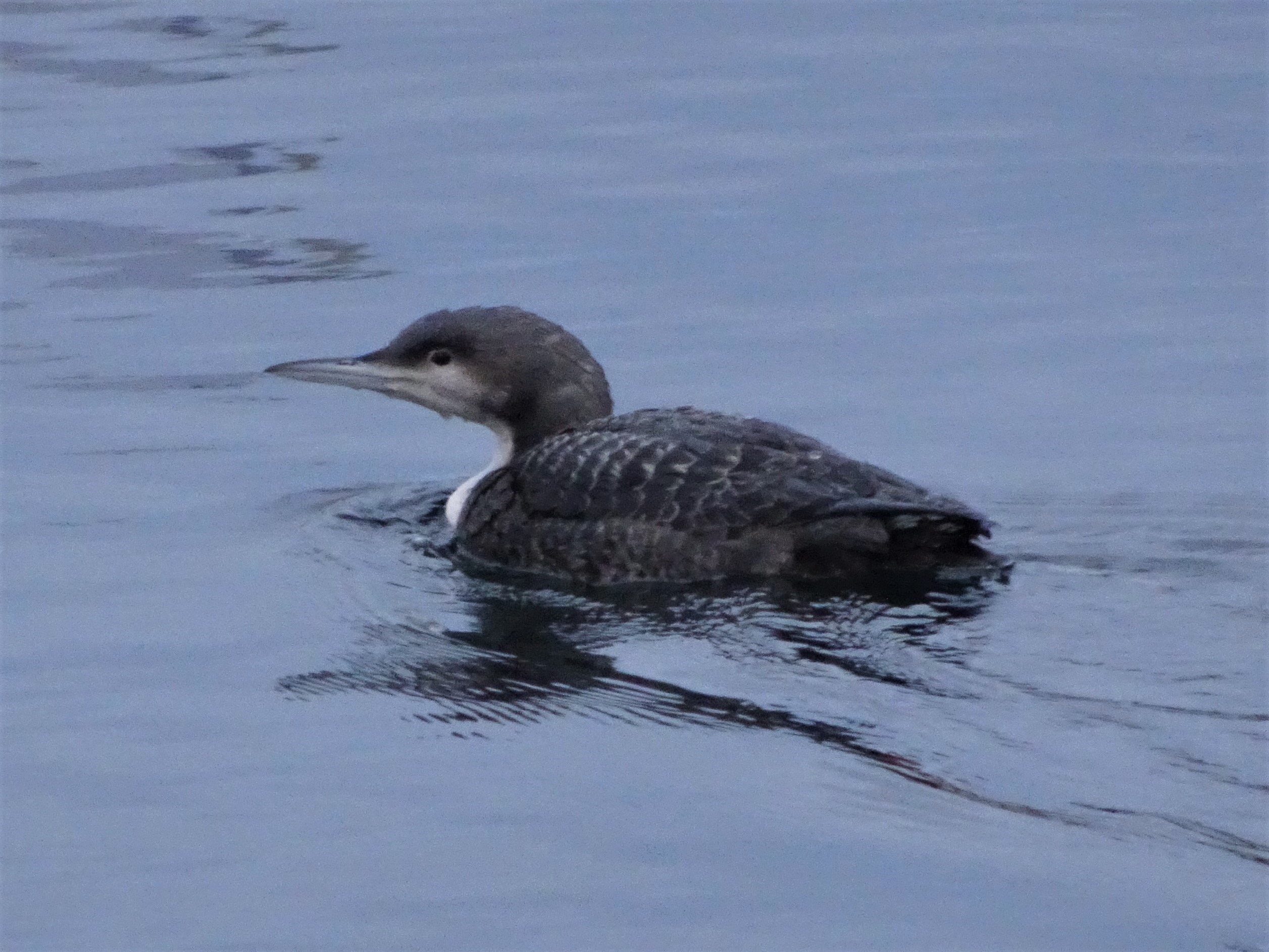
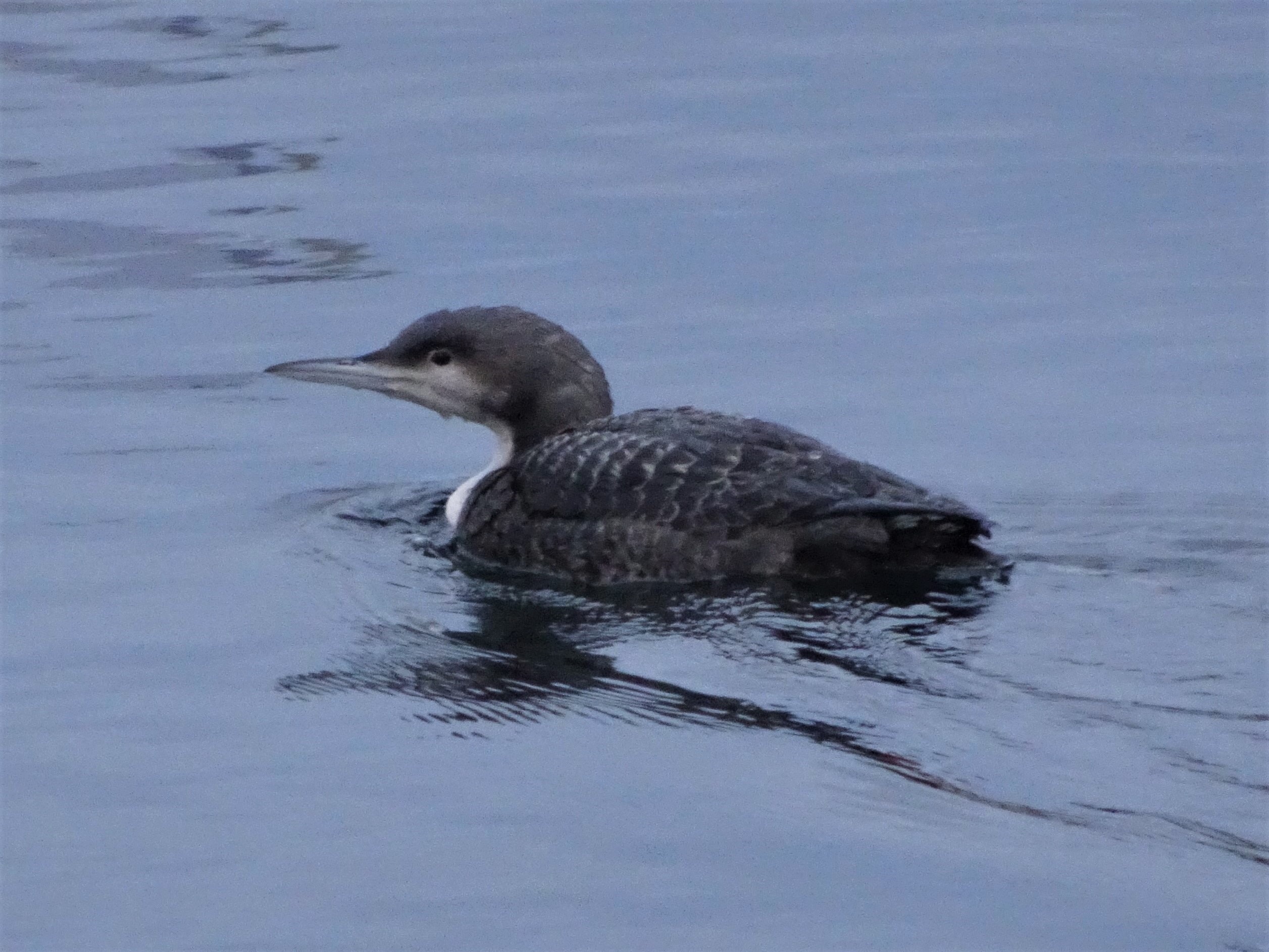
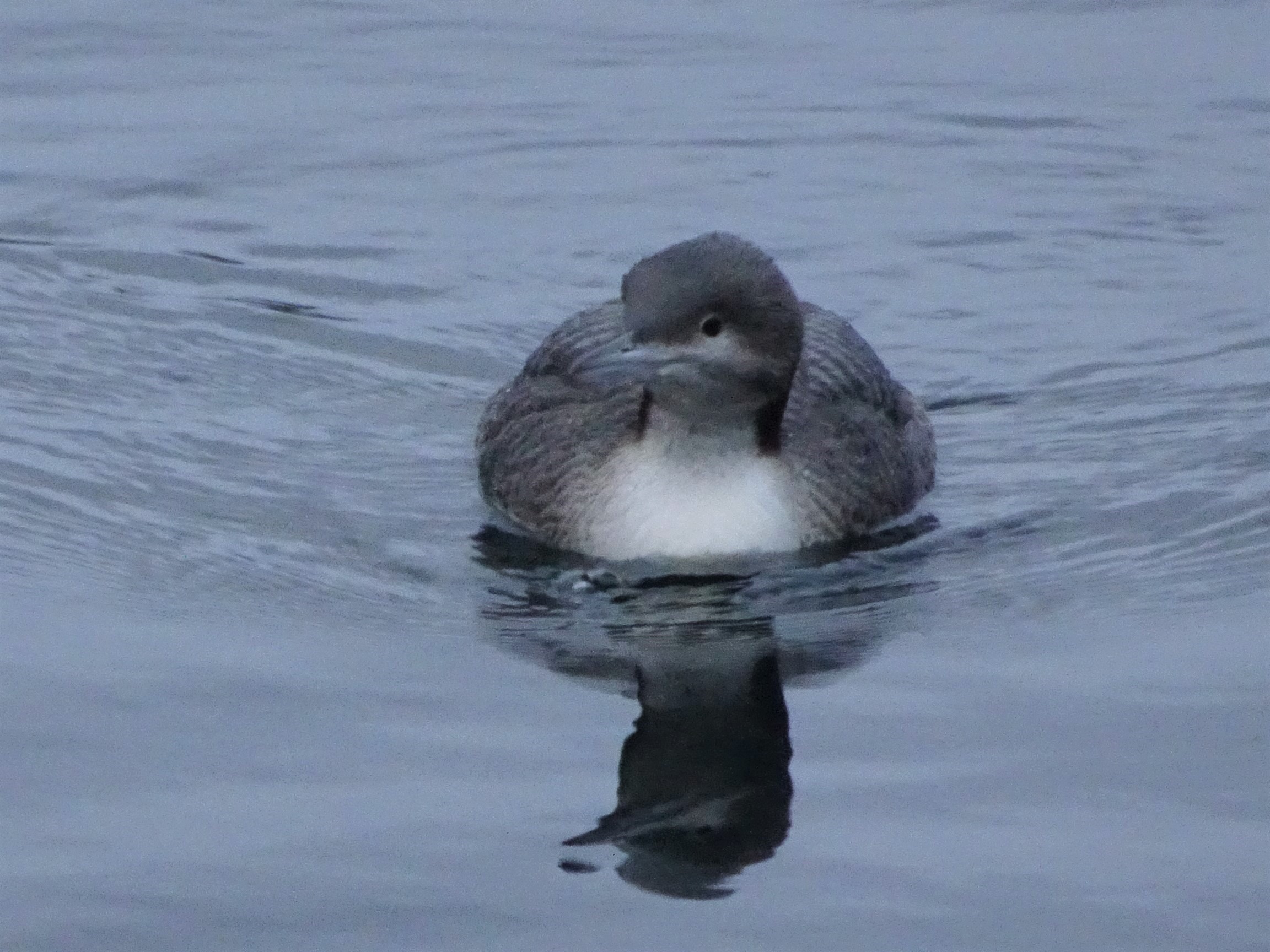
Past the rows of small boats docked in the shelter of the breakwater, the medium-sized, indeterminate loon swam into the harbour, looked around, dipped its face into the water, scouting around for prey beneath the light blue surface. It approached to a distance of fifteen metres or so, surprisingly close, when it vanished behind one of the docked boats. Stepping closer, I realized it had gone underwater, and a minute later it surfaced a hundred metres away, below the embankment on the opposite side.

A Pacific Loon on the water
A Pacific Loon. (c) Endre Harvold Kvangraven

I couldn’t quite place the bird, but thought it might be an Arctic Loon, maybe a juvenile. I was used to seeing Arctic Loons in summer plumage in Østmarka at the edge of Oslo, keeping their distance far out on secluded forest lakes, but had less experience with them in winter plumage. It seems that most of the Arctic Loons that breed in Norway migrate to Southern Europe for winter, but a fair number do remain in Norwegian waters. It swam out of Goavika into Vistevika proper, and I followed to the edge of the breakwater, taking a few more photos as it receded into the distance.

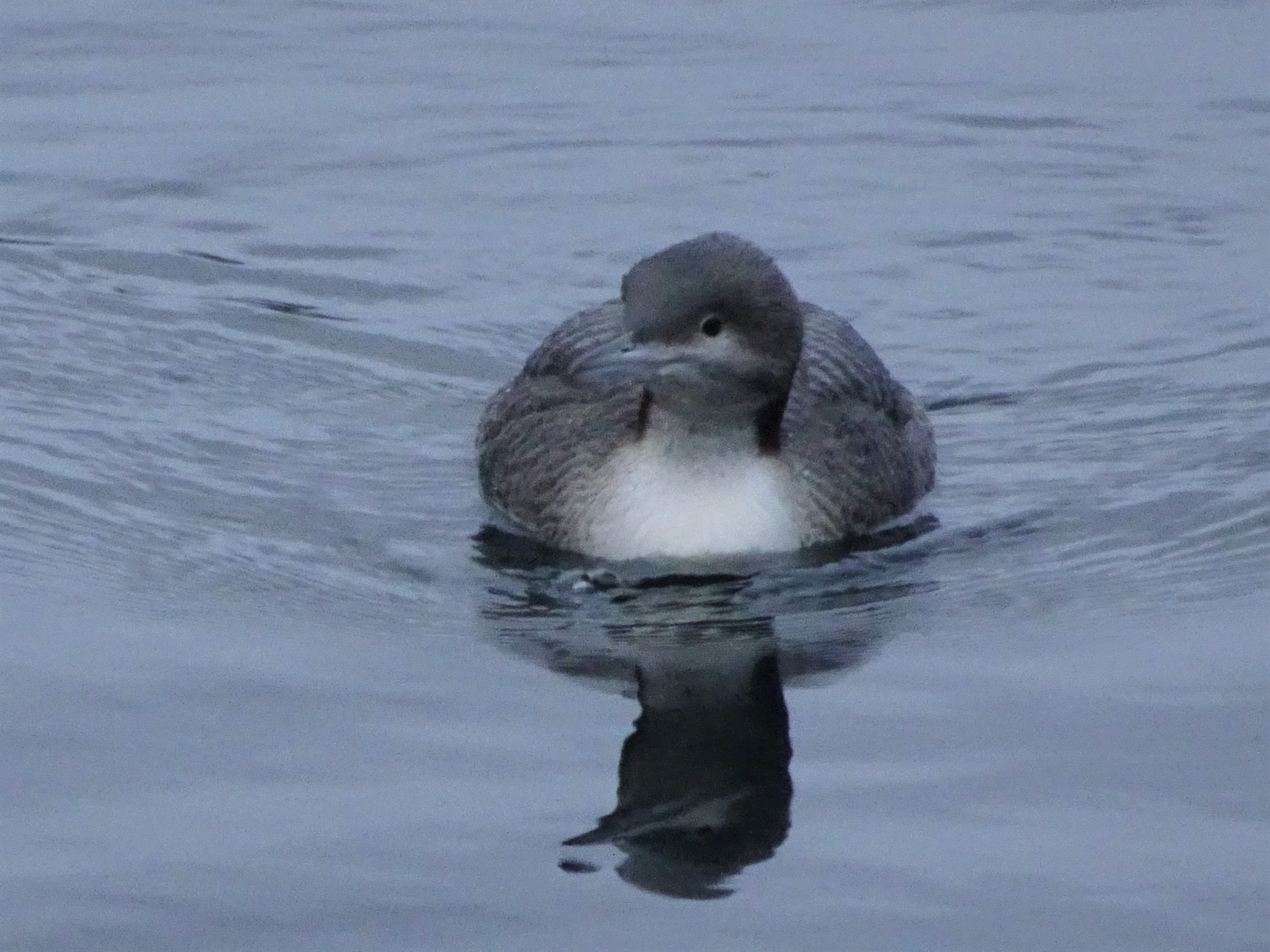
Going through the photos in the evening, I was still not sure what to make of the bird. Looking at field guide illustrations and images online, Arctic Loon seemed to be the only likely candidate, but it lacked the white ‘thigh patches’ diagnostic of that species. When I ran the photos through the Norwegian bird identification app Artsorakel (which is unreliable at the best of times but can offer useful suggestions), Arctic Loon got a high score on one photo but the results for the rest were wildly inconsistent.

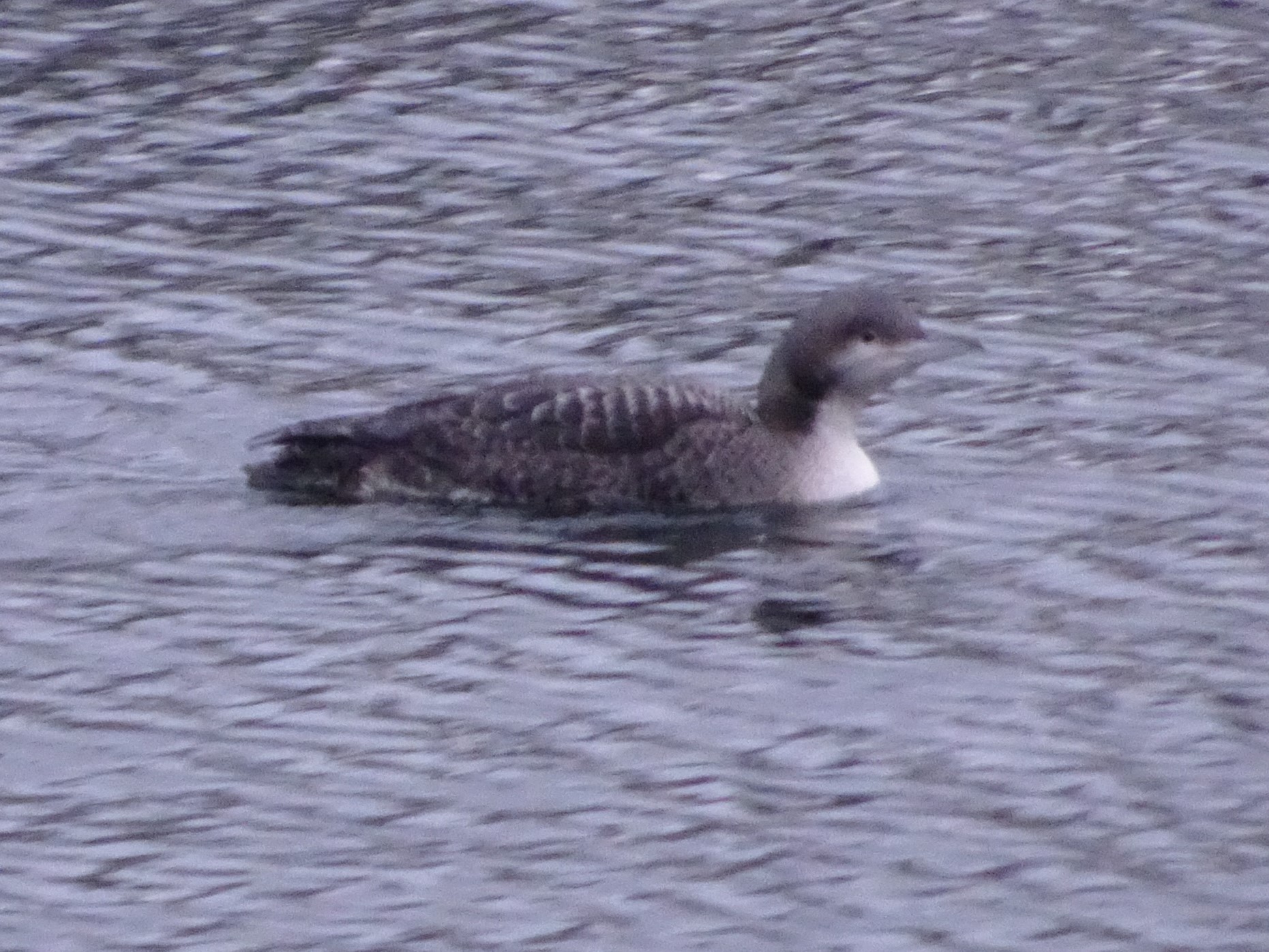
A Pacific Loon swims towards the camera
A Pacific Loon. (c) Endre Harvold Kvangraven

Realizing that I couldn’t identify it, I shared the photos with the relevant bird identification group, “ID og fugl!” and it didn’t take long before Tor Olsen from the local Rarities Committee pointed out that the bird was indeed juvenile and that some of its features were consistent with Pacific Loon. He discovered the first Pacific Loon ever recorded in Norway off the coast of Lista in Agder county in 2015, so he should know. Since then, two more Pacific Loons have been recorded in Norway, both in Trøndelag, which would make “my” bird the fourth in Norway and the first in Rogaland county. Twenty or so individuals have been documented in Europe as a whole.

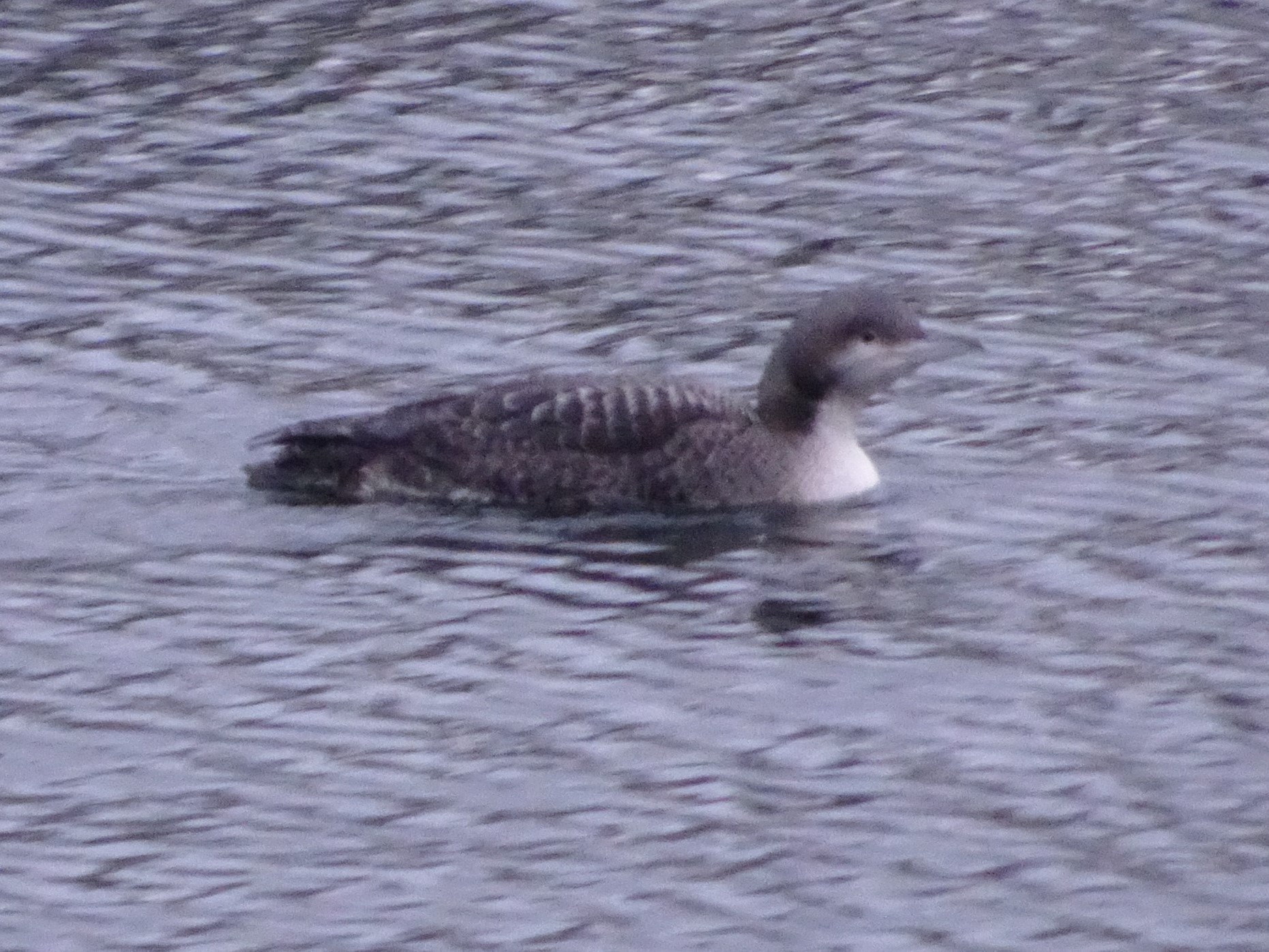
Andreas Gullberg created a series of photos arranged in sets of juvenile Arctic Loons, juvenile Pacific Loons, and my photos of “the Vistevika-loon”, and seeing the different birds side by side, it became clear that this was in fact a Pacific Loon. The main difference between Pacific Loons and Arctic Loons is that the former lack the white thigh patches. They’re also slightly smaller on average, with a smaller, more delicate bill and more rounded head and neck, and tend to show more contrast between the dark on the sides of the neck and the white in front. I noted the dark on top of the head extending to below the ear coverts, the darkish cheeks, the back of the head somewhat paler, and thought I could see faint suggestions of a dark throat strap, features that are characteristic though not diagnostic of Pacific Loon.

When I reported it to Artsobservasjoner, the Norwegian database of species observations, it was immediately accepted by the local Rarities Committee, and a good three months later, BirdLife Norway would confirm the record.

A Pacific Loon
A Pacific Loon. (c) Endre Harvold Kvangraven

Many went to Vistevika to look for the loon, but it seems to have vanished as quickly as it came. What’s a Pacific Loon doing this side of the Atlantic? Their nearest breeding range is in the vicinity of Baffin Island in the Canadian Arctic, and it seems more likely to have come from that side than from their even more distant range in far eastern Siberia. Either way, a Pacific Loon in Norway is thousands of miles from home. The beach in Vistevika is a place where dead Common Murres and other seabirds tend to wash up, and I wouldn’t be surprised if it was starving, desperate for food, which could explain its apparent fearlessness. A juvenile Pacific Loon that turned up at a lake in Switzerland in December 2015 (the first record for that country) attracted hundreds of birders only to die of starvation two weeks later, and who’s to say a similar fate couldn’t have befallen the Vistevika-loon. Then again, there are plenty of nooks and crannies along the coast of Rogaland where it could still be hiding out, diving for fish, preparing to fly back across the ocean, to places where it is more likely to encounter others of its kind.

Loons are the stuff of myth and legend, associated with distant and mysterious Arctic lakes. In popular culture, they’re mostly known for their eerie wailing calls, echoing the howling of wolves that, like loons, thrive in remote parts of Canada, Alaska and Siberia. Two species breed in Norway, the Arctic and the Red-throated, but in coastal Rogaland, Common Loons are conspicuous winter visitors from Iceland, and Yellow-billed Loons are known to pass through. Worldwide, there are five species, and now, with Pacific Loon, all of them have been recorded in Rogaland.

Garden Bird Count 2022 (Netherlands)

by Wessel Ganzevoort, Radboud University

This was my second year participating in the Dutch National Garden Bird Count, marketed as the biggest citizen science project in the country. Last year a record-high 200,000 people participated, and there was an ambition to go even beyond that; while that didn’t succeed, the total number of participants still reached 170,000+, nothing short of impressive.

Like last year, I prepared myself by leafing through an online garden bird identification course, which is offered free by the Dutch Vogelbescherming, along with another bird identification course designed by one of my interviewees from the EnviroCitizen fieldwork. Before going to bed we refilled our bird feeder with seeds, peanuts, and special peanut butter for birds. The next morning, I positioned myself in front of our balcony for 30 minutes (after removing an indignant cat from the chair) and placed my binoculars, field guide and laptop for submitting the sightings close by. Now all I needed was birds to identify!

Unfortunately, the garden birds apparently missed the memo. While last year’s score wasn’t amazing (two great tits, one blue tit, one blackbird and one crested tit) this year all I could record were two blue tits. Interestingly, while great tit and blue tit are some of the most common species and very easily distinguishable in a field guide, it did strike me how identifying them in motion isn’t nearly as easy. The two blue tits demonstrated some entertaining foraging behavior, but it was still a rather meagre catch, especially since we get some very interesting birds on our balcony, including great spotted woodpeckers and nuthatches. Of course, the scientist in me knew that meagre records can be just as interesting to submit.

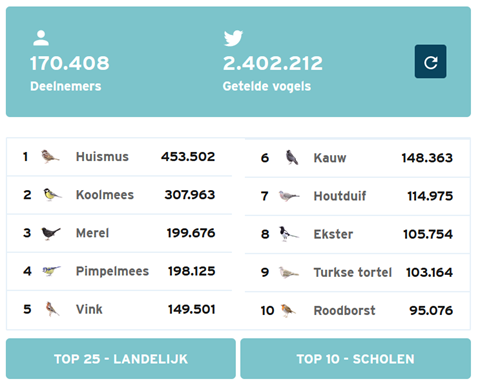
Table showing total numbers of birds spotted in the Netherlands: 170000 people recorded results and 2402212 birds were counted. The top three birds spotted were House Sparrows, Coal Tits and Blackbirds, in that order.

As shown above, after the classic house sparrow and great tit, this year the blackbird just barely edged out the blue tit and reentered the top 3. This is interesting since their numbers had dwindled a bit; 2022 has been declared the Year of the Blackbird for that reason, and we hope to play a small part in that event in the context of Work Package 3. Finally, it seems mother nature felt a little sorry for me after such a small yield, so after submitting my data a whole swarm of redwings visited a nearby tree, allowing me to appreciate them through my binoculars. I couldn’t include them in the count, but they did make my day.

Garden Bird Count 2022 (Norway)

by Ann Elisabeth Laksfoss Cardozo, University of Stavanger

On the last weekend of January, I participated in the Norwegian garden bird count for the third time. The first year, I did not put out any food. Consequently, I got two magpies and one crow. That was it. Actually, I had not really understood the whole thing, so I only posted about it on Facebook.

However, the second time I understood that a buffet for the birds was the way to go. I hung out a feeder in my big garden tree, and provided sunflower seeds, peanuts and fat balls. And I recorded all my findings, both from my garden and also from a wood nearby. I had a bullfinch, starlings, great tits and blue tits. I also had a gorgeous robin.

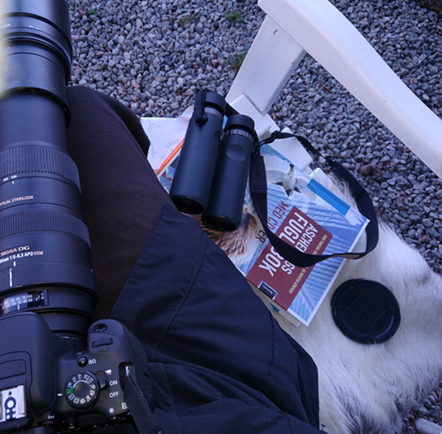
Image of equipment for recording and identifying birds during the garden bird count. These include a camera with telephoto lens, binoculars and a bird guide.
Binoculars, camera, bird guide and pen and paper. All set, keeping warm seated on a reindeer skin.

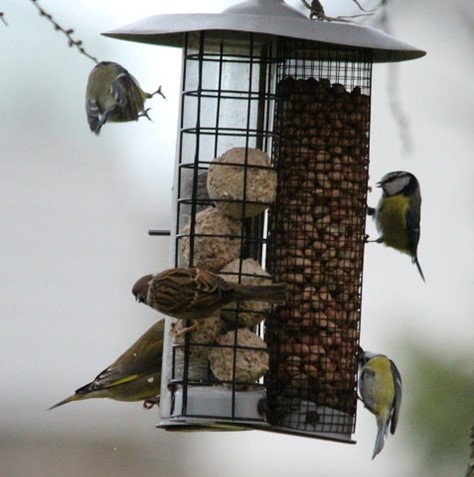
This year I had put out even more food and sat outside for an hour and a half, on a bench under the veranda, with binoculars, a camera, the bird guide and a notebook. I was thrilled at getting 15 species. A greenfinch couple, a chaffinch couple, 18 starlings, 20 house sparrows and 10 tree sparrows, a robin, a wren, a blackbird, several blue tits and great tits, two magpies and two hooded crows, one brambling, two collared doves and one common wood pigeon. This also illustrates my learning process across a relatively short time span. It is so much more rewarding to watch birds when one is capable of distinguishing between the female and male sparrow, and the sparrow and the brambling.

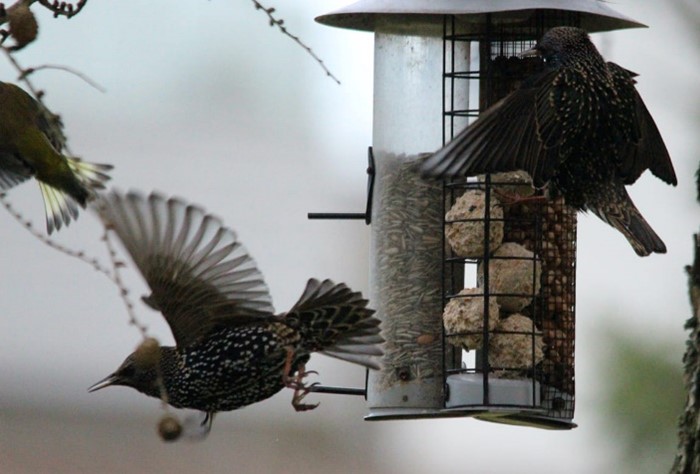
The tail of a green finch as it flies off the picture to the left, and two starlings feeding at a bird feeder
The tail of a greenfinch and two starlings
Three blue tits, a greenfinch and a sparrow feeding from a bird feeder
Blue tits, a greenfinch and a sparrow enjoy good from the feeders

I discovered that the starlings love the fat balls, that the sparrows quarrel a lot, and that the brambling is very cautious. I also enjoy observing how fast the tits move from the feeder to safer places. I understand why, after one day I even saw a sparrowhawk in my garden. It was looking for breakfast… luckily for my beloved tits they made it into a safe space. However, I do hope the hawk also got food. The sheer speed of that hawk amazed me. It came into my garden like a fighter plane and in less than a couple of seconds it was gone again.

Exposición sobre ornitólogas victorianas

Clara Contreras Ameduri, investigadora postdoctoral en ecocrítica literaria, Universidad de Extremadura

Click here to read in English

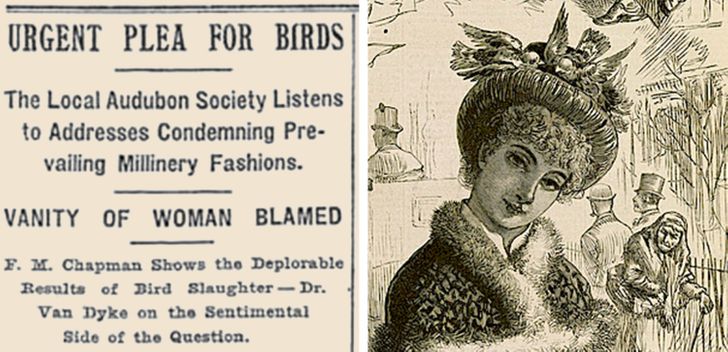
El 21 de enero tuve el placer de ver publicada en Europeana mi exposición sobre ornitólogas victorianas. Como investigadora de humanidades ambientales, el siglo XIX me parece una época particularmente fascinante. A pesar de ser recordado como la era de la industrialización y la expansión urbana, este periodo también vio nacer el activismo ecologista. Desde el interés por la historia natural al auge de los primeros movimientos por la conservación de la naturaleza y el bienestar animal, las reacciones victorianas ante los cambios radicales en el antropoceno adoptaron diversas formas en la ciencia, la literatura, el activismo político y las reformas educativas. A menudo, estas visiones se manifestaban mediante apasionadas actividades ornitológicas. Los pájaros son elementos notables en la escritura femenina Victoriana, apareciendo tanto como objetos de estudio científico como metáforas que revelaban el confinamiento y la marginalización de las mujeres en la cultura decimonónica. Sobre todo, la observación de aves constituyó un puente hacia la conciencia ambiental y el activismo político. Fue también una herramienta crucial para la participación femenina en la esfera pública en una época en la que se esperaba que las mujeres se limitasen al ideal del “ángel del hogar”.

Advert discouraging women from using feathers in their hats
Audubon Society bird protection advertisement, The New York Times, 1897 / PBS, © John N. Hyde / Library of Congresss

Al salir de la esfera doméstica para entrar en el ámbito tradicionalmente masculino de la investigación científica, escritoras de naturaleza como Susan Fenimore Cooper, Olive Thorne Miller, Graceanna Lewis, Florence Merriam Bailey y Fannie Hardy Eckstorm abrieron caminos para futuras generaciones de activistas ecologistas. Esta exposición se centra en ornitólogas pioneras de Estados Unidos que documentaron sus actividades ornitológicas para denunciar el decrecimiento de poblaciones de aves a causa de la caza, el maltrato animal y el uso de taxidermia en la moda. Al igual que sus aliadas británicas Emily Williamson y Etta Lemon, estas valientes autoras americanas lideraron una implacable cruzada por la protección de las aves y contra el comercio de plumaje, el cual era responsable por la aniquilación de cinco millones de pájaros al año. A pesar de ser excluidas de los círculos académicos masculinos, contribuyeron a la participación femenina en las ciencias naturales, así como a la prohibición del uso de plumas en la industria de la moda. Espero que esta exposición ayude a recuperar sus historias mayormente olvidadas: https://www.europeana.eu/en/exhibitions/women-writing-birds.