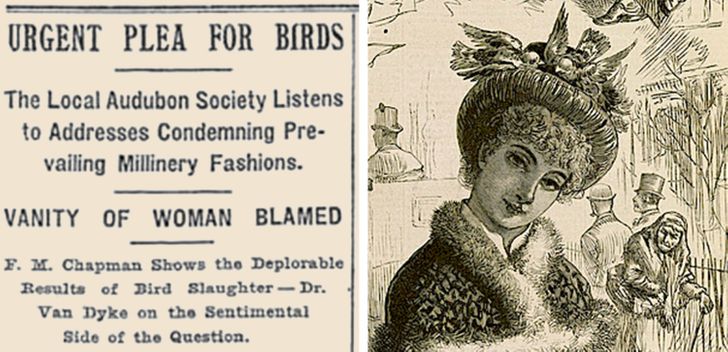
On January 21st, I was pleased to see my exhibition on Victorian women ornithologists published on Europeana. As a researcher in environmental humanities, I consider the nineteenth century a particularly fascinating era. Despite being often remembered as an age of industrialization and urban expansion, this period also witnessed the dawn of organized environmental activism. From the craze for natural history to the rise of early movements for nature conservation and animal welfare, Victorian responses to radical transformations in the Anthropocene adopted diverse shapes, including science, literature, activism, and educational reforms. Such views were often manifested through passionate ornithological activities. Birds are notable elements in Victorian women’s writing, ranging from objects of scientific scrutiny to the symbolic use of avian imagery to reveal the confinement and marginalization of women in nineteenth-century culture. Most importantly, birdwatching constituted a bridge towards environmental awareness and political advocacy. It was also a crucial tool for female participation in the public sphere at a time when women were expected to comply with the domestic ideal of the “angel in the house”.
By stepping outdoors into the male-dominated field of scientific research, nature writers such as Susan Fenimore Cooper, Olive Thorne Miller, Graceanna Lewis, Florence Merriam Bailey, and Fannie Hardy Eckstorm paved the way for future generations of bird-lovers and environmental activists. This exhibition focuses on pioneering ornithologists from the United States who documented their ornithological activities in order to denounce the decrease of bird population due to hunting, cruelty towards animals, and Victorian taxidermy fashion. Just like their British allies Emily Williamson and Etta Lemon, these brave American authors led a relentless bird-protection crusade against the plumage trade, which was responsible for the mass annihilation of five million birds every year. Despite their exclusion from formal academic circles, they contributed to female participation in natural science, as well as to the eventual prohibition of feathers in the fashion industry. I hope this exhibition will help recover their largely forgotten stories: https://www.europeana.eu/en/exhibitions/women-writing-birds.
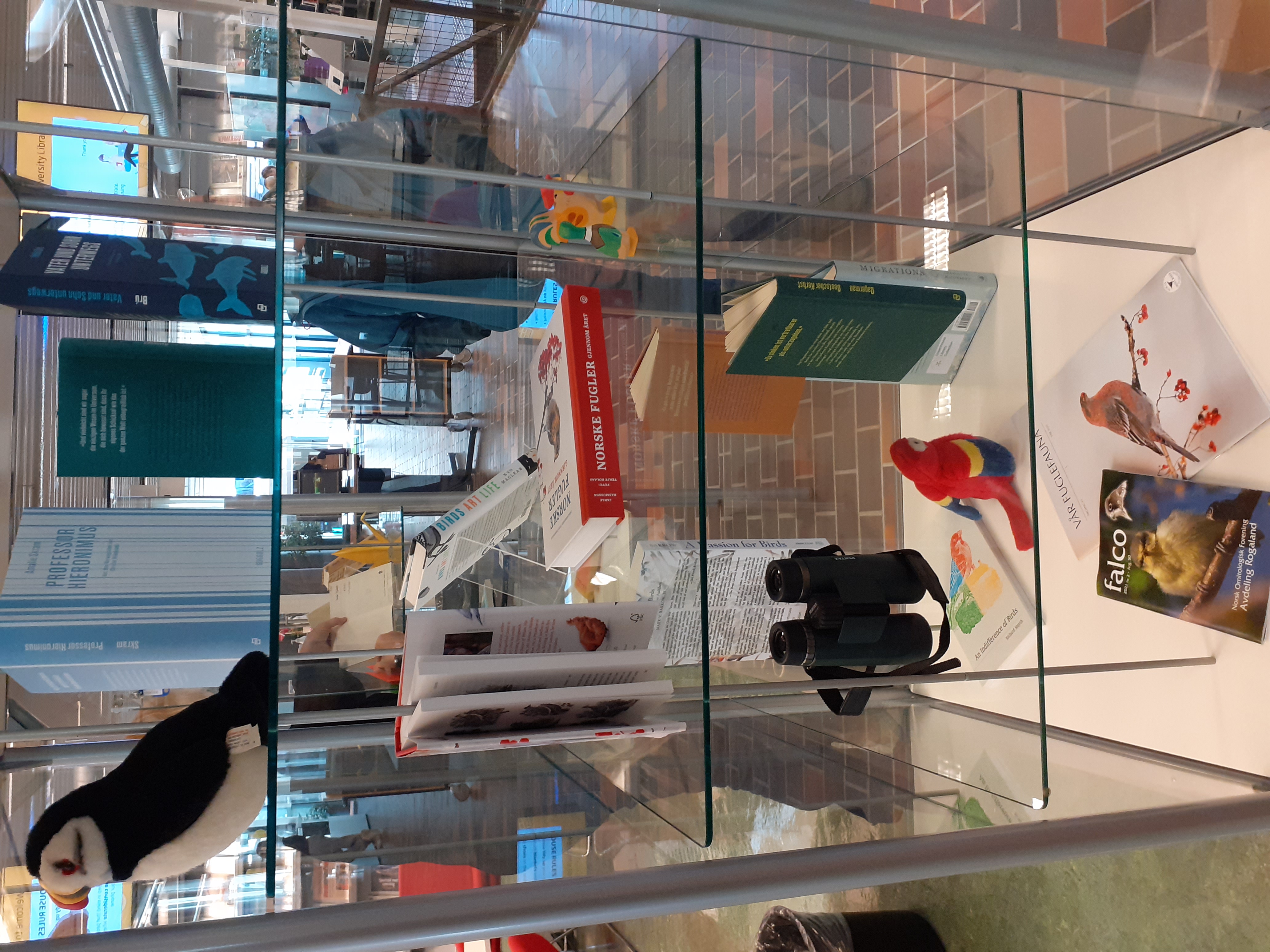
Photographs of the exhibition at the University Library. (c) Ann Elisabeth Laksfoss Cardozo
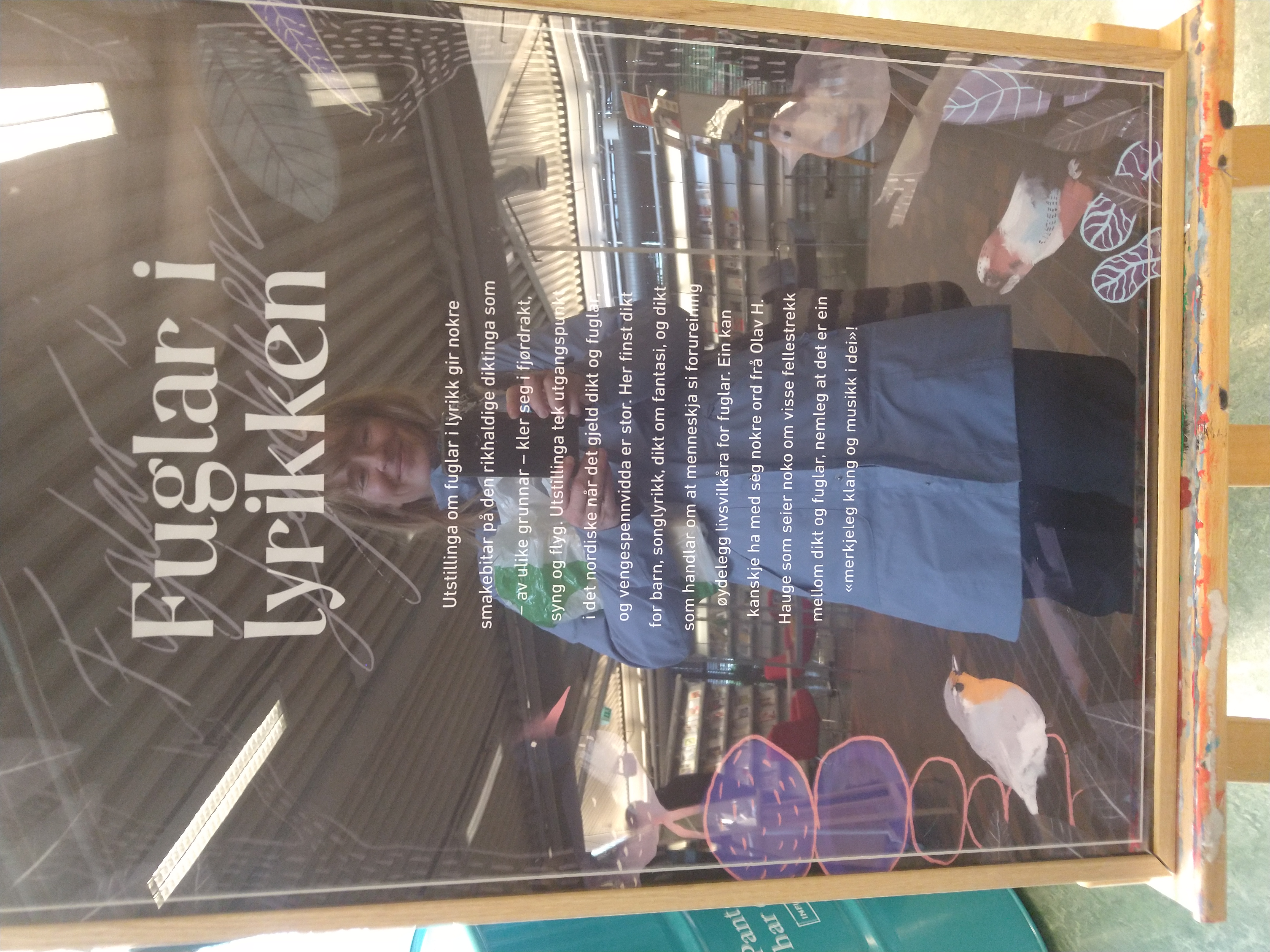
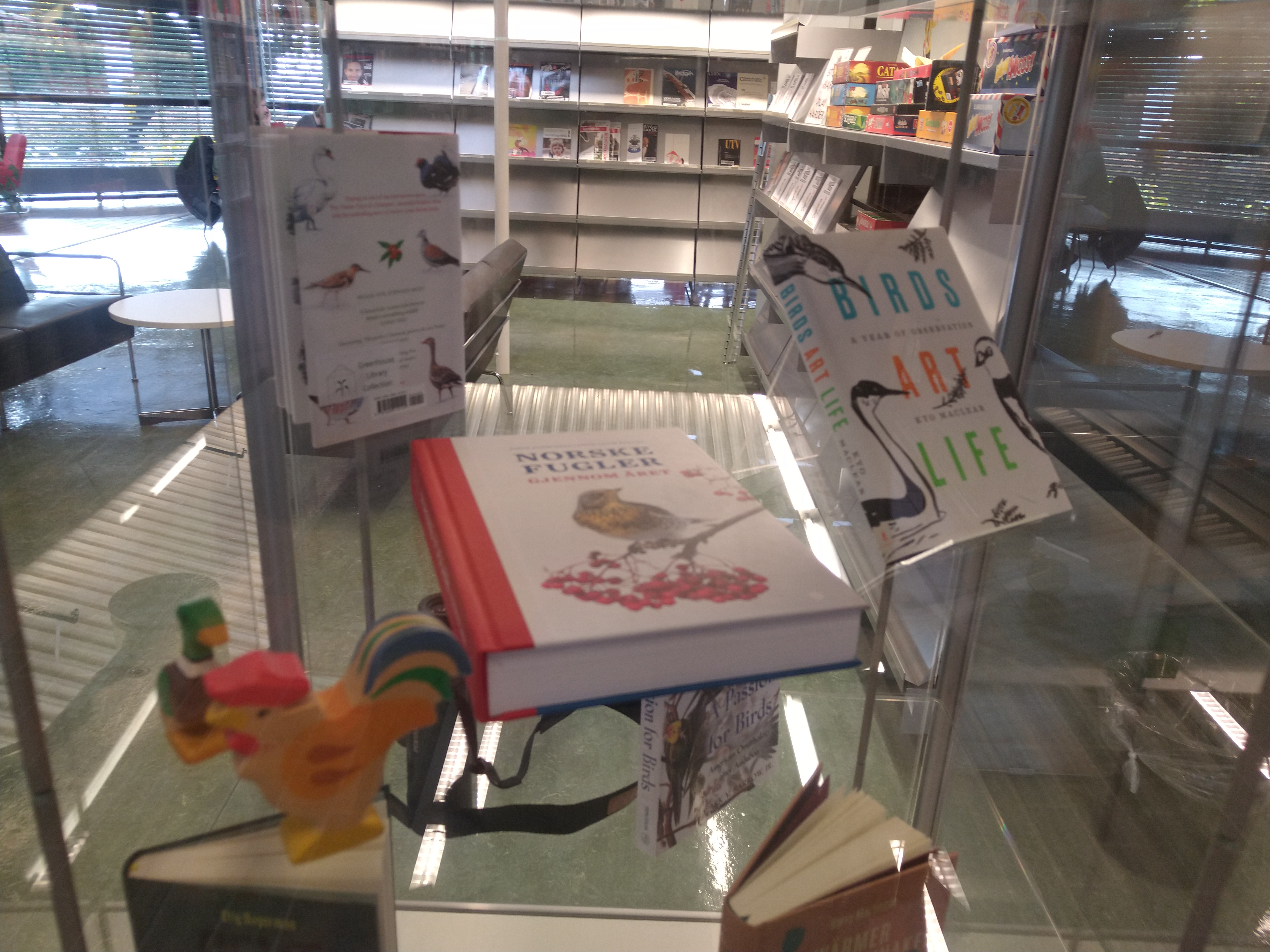
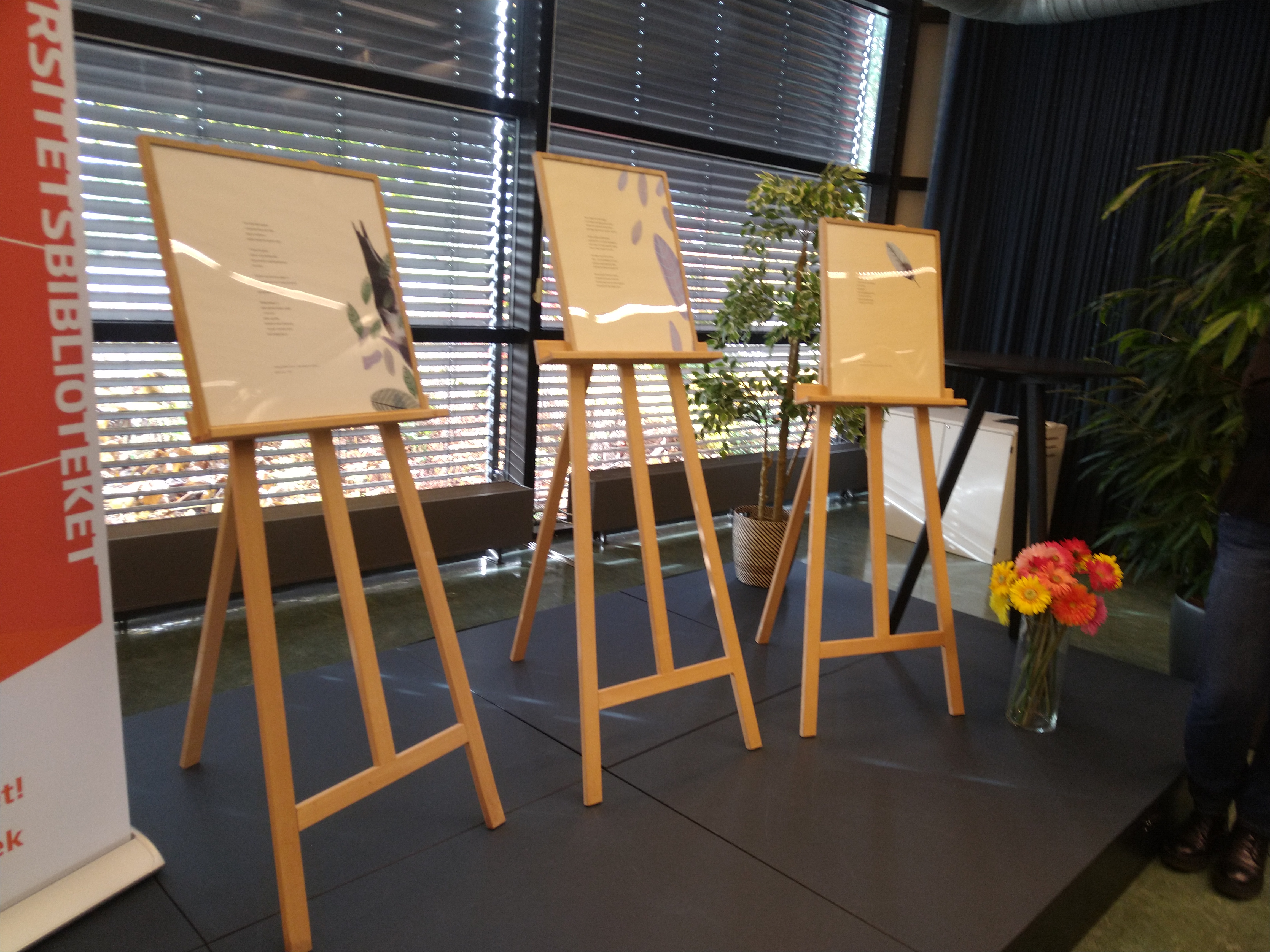
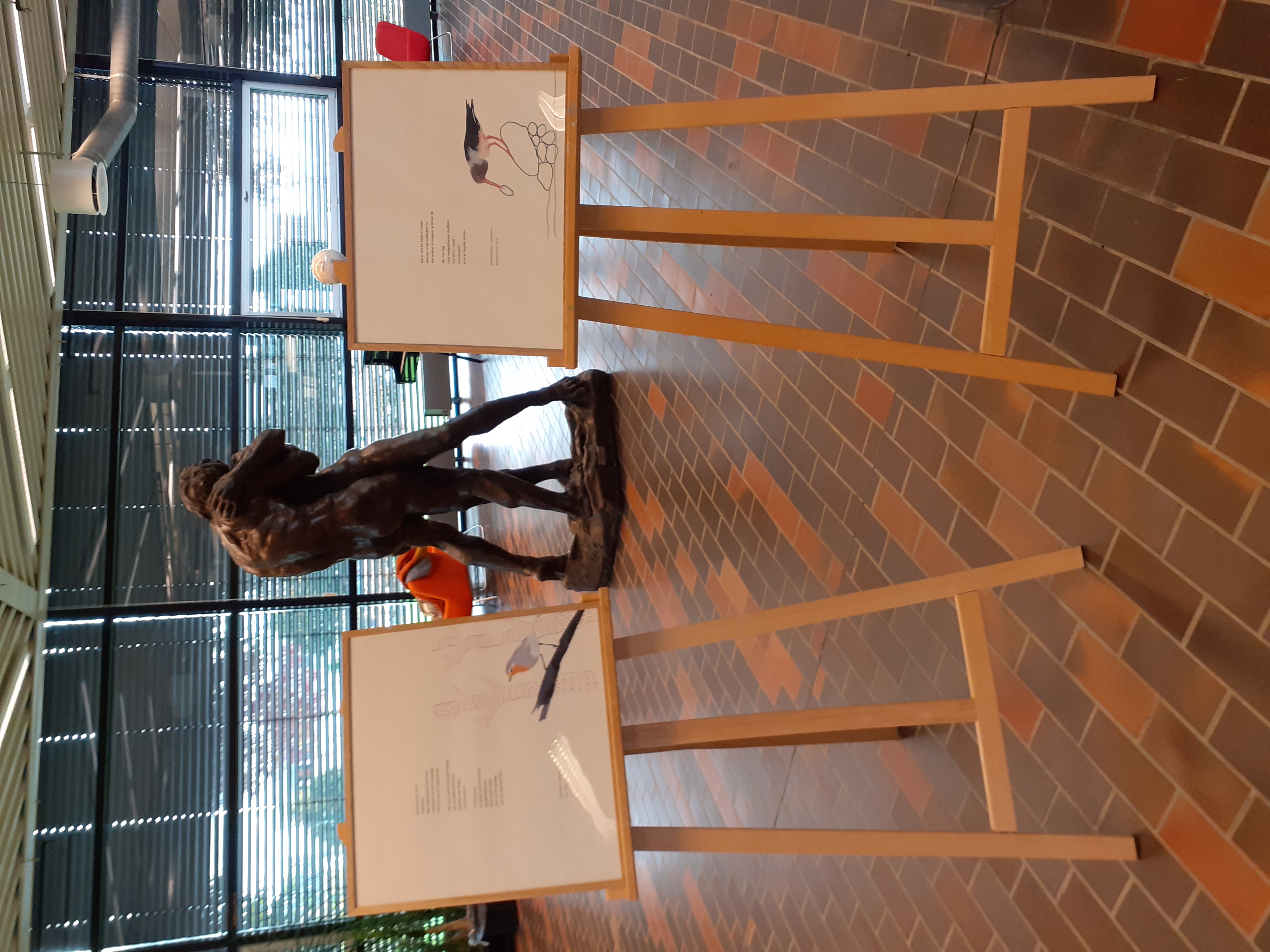
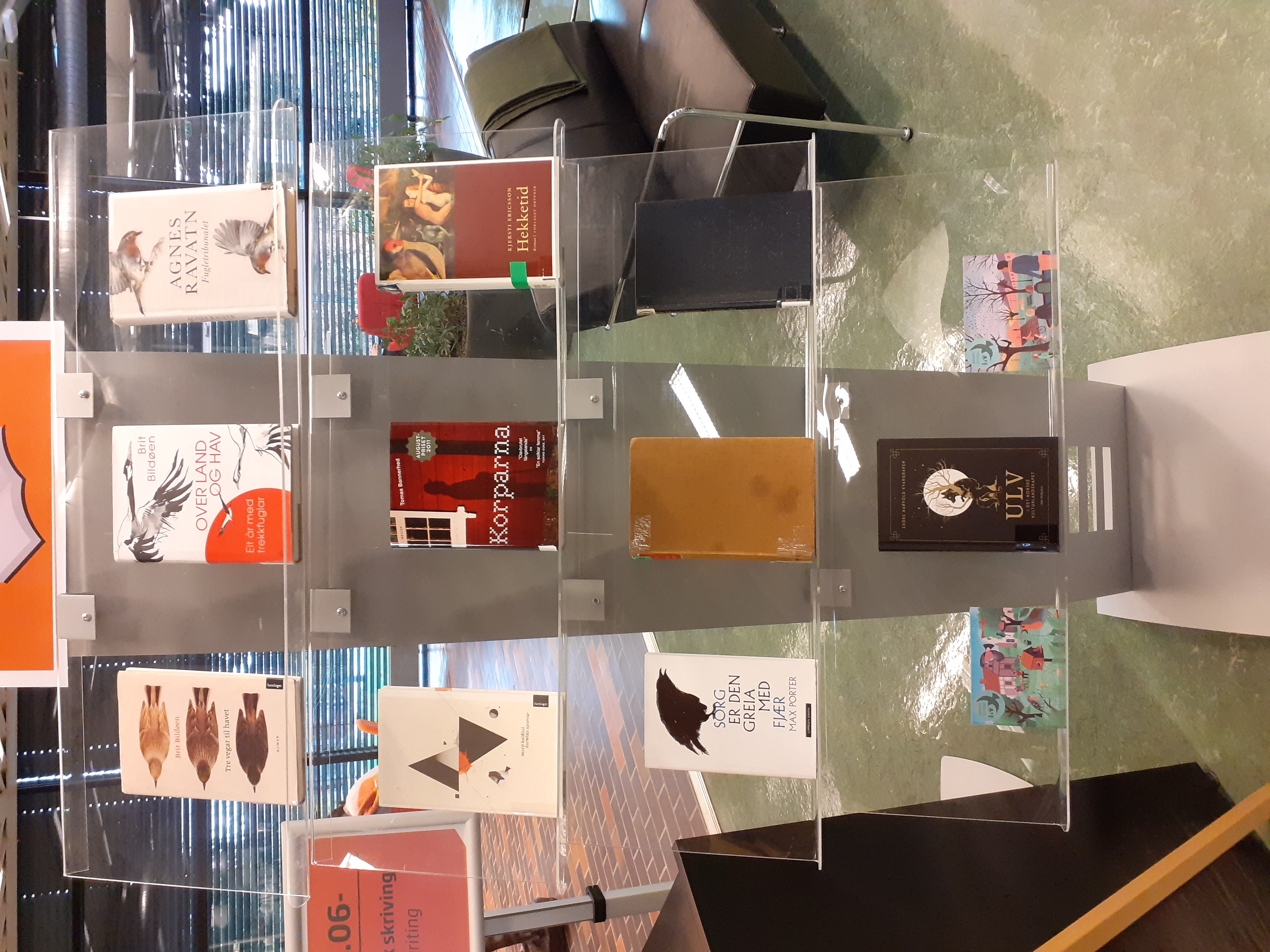
In the autumn of 2021, the exhibition Fuglar i lyrikken (Birds in poetry) was on display in the University Library at the University of Stavanger. The exhibition gave a taste of the variety of poetry in Norwegian about birds. This included poems for children, lyrics from songs, and poems about the effects of human activity on bird populations. While only able to give a taster of the poetry that exists, the exhibition highlighted the range of different ways of engaging with birds. The exhibition was produced by the Nynorsk Culture Centre (Nynorsk kultursentrum) and was first displayed at the Kielland Centre in the Sølvberget Library and Culture Centre, Stavanger. The Kielland Centre webpage on the exhibition has suggestions (in Norwegian) for further reading.
Photographs of the exhibition at the University Library. (c) Roderick Dale
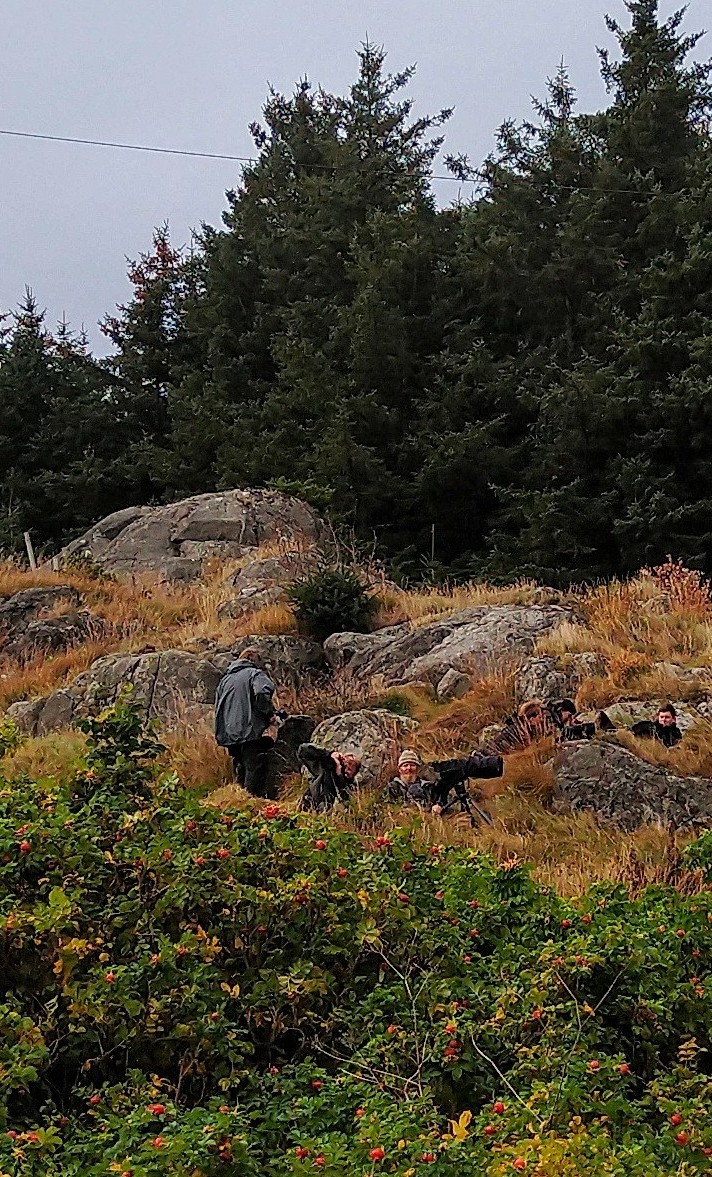
As a relatively new member of the Norwegian Ornithological Society/Birdlife Norway, I wanted to check out the birds and birders on Utsira, Norway, in early October 2021. After reading source texts about birds on Utsira and having heard about James Lawrence Chaworth-Musters (1901-1948) who found rare species on Fair Isle and therefore hypothesised that the same could be found on Ustira, a trip to the island became almost like a pilgrimage. Would I too be able to experience a Yellow-browed Warbler in the flesh? Before I set off, I wondered a bit about how should find birders there. Perhaps I would end up roaming around alone? What if I saw neither birds nor people? And would it be too rough and ready … and just terrible weather? So, I contacted bird-ringer Truls W. Andersen at the ringing station and he wrote a very welcoming message back and told me to get a place to stay overnight. I chose the Sildaloftet bed and breakfast because it was large, and social as a result of people needing to share bathroom, kitched and sitting room. Then I checked the programme on the net and saw that from Thursday 7th October there were meetings every evening. The forecast was for heavy wind from the afternoon of 7th October, so I chose to take the boat from Haugesund at 11am to avoid it. It was a lovely trip over.
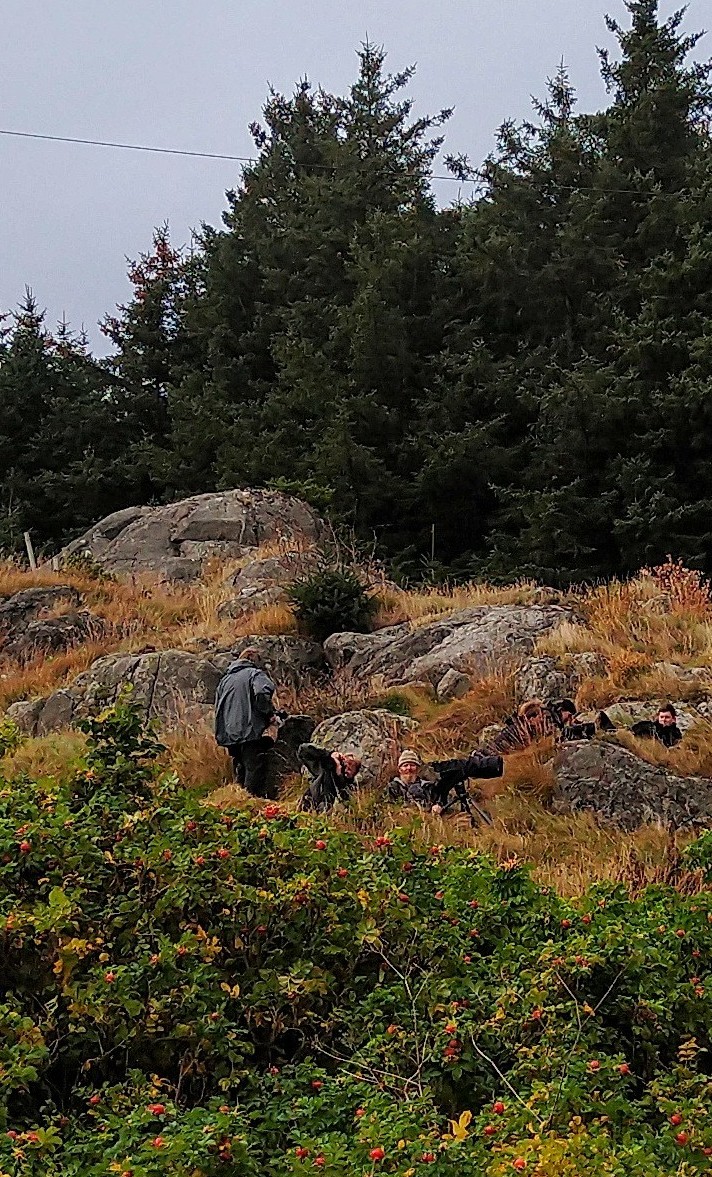
Birders at Utsira (c) Ann Elisabeth Laksfoss Cardozo
On the boat over, I met birders with binoculars hanging round their necks and camouflage clothes on. I had met one of them before on a Birdlife Norway tour in Jæren. He checked my knowledge of birds by pointing at an Eider Duck that was in the middle of moulting its feathers and I failed to identify it. However, I did not lose courage because of that, and told him I wanted to see Gannets, so he tipped me off whenever he saw them. That was kind of him. They were high in the sky and, even with binoculars, I found it hard to see that they really were Gannets, but I was certain that I would see them at Utsira. We saw two Razorbills on the water right beside Vibrandsøy, and I learned that Corn Crakes had nested there. They are now in sharp decline, probably due to changes in agriculture.
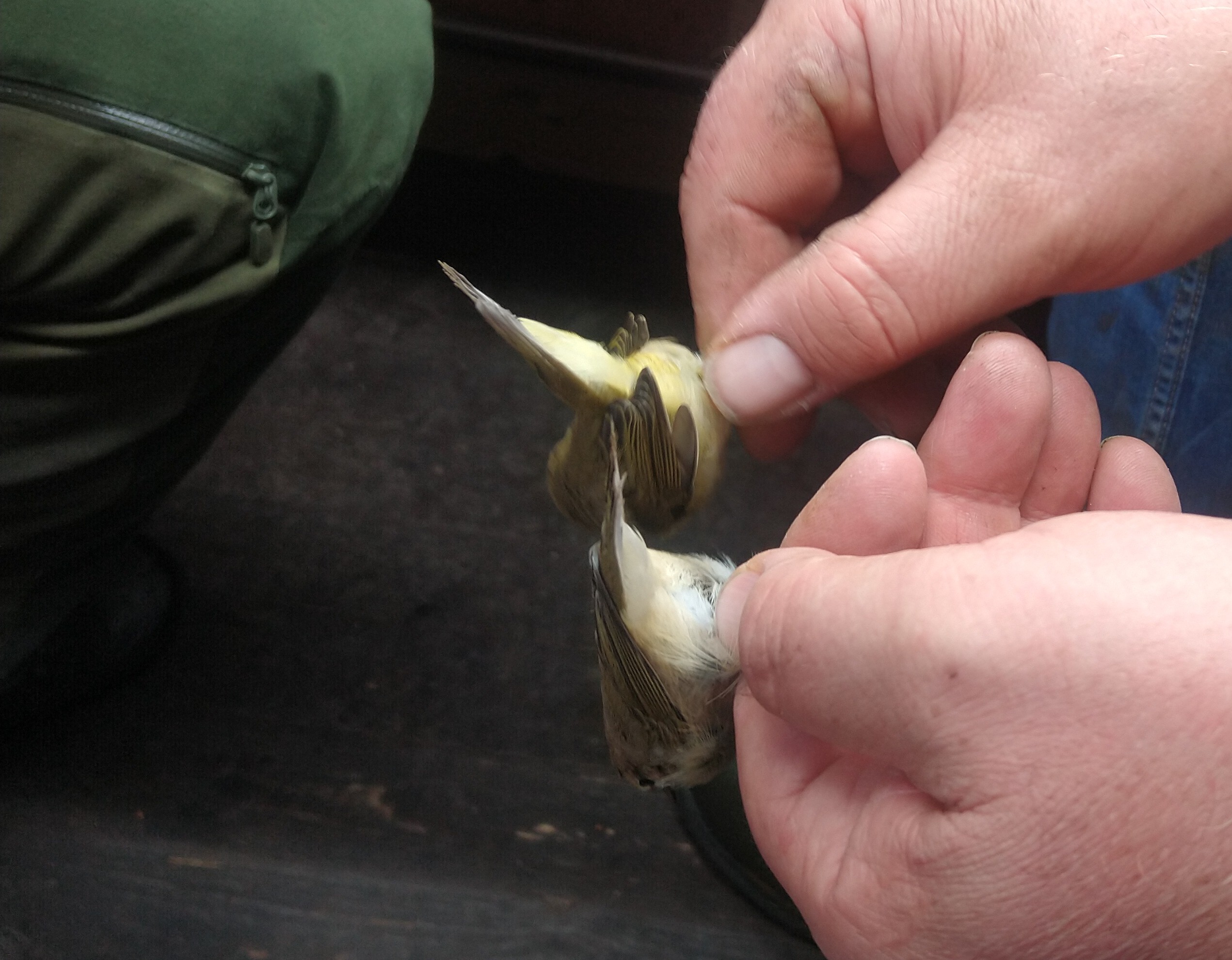
Chiffchaffs (c) Ann Elisabeth Laksfoss Cardozo
There was also a very pleasant group of birders from the Odda area on the boat; two sisters and four men. They complained that there were so few birds round Odda, and they had only seen five different species on the previous birding tour. But, they were regulars on Utsira and arrived clad in camouflage with long camera lenses. Along with these, the shop Natur og Fritid was represented by Jonas Langbråten from Lista bird-station. This boded well.
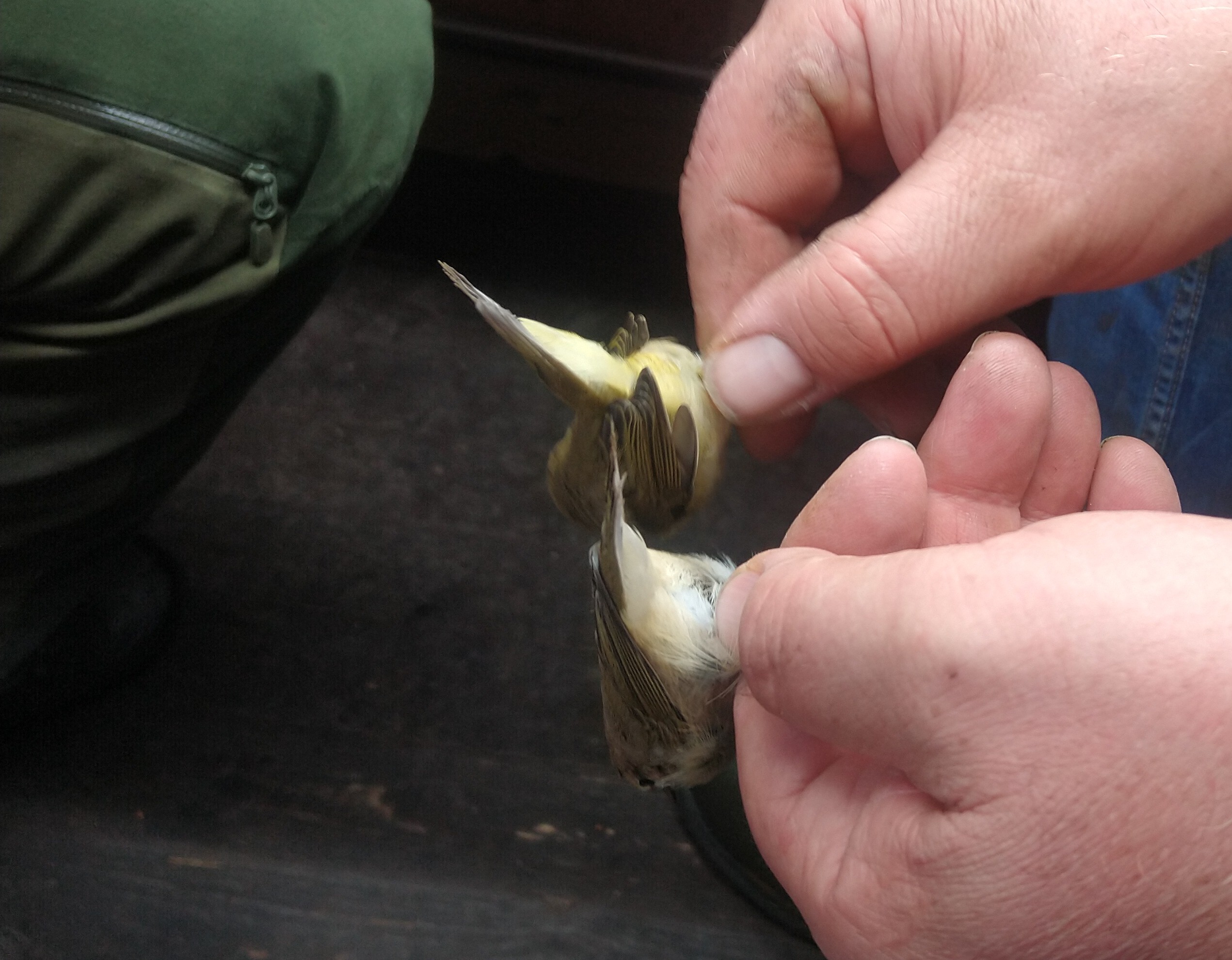
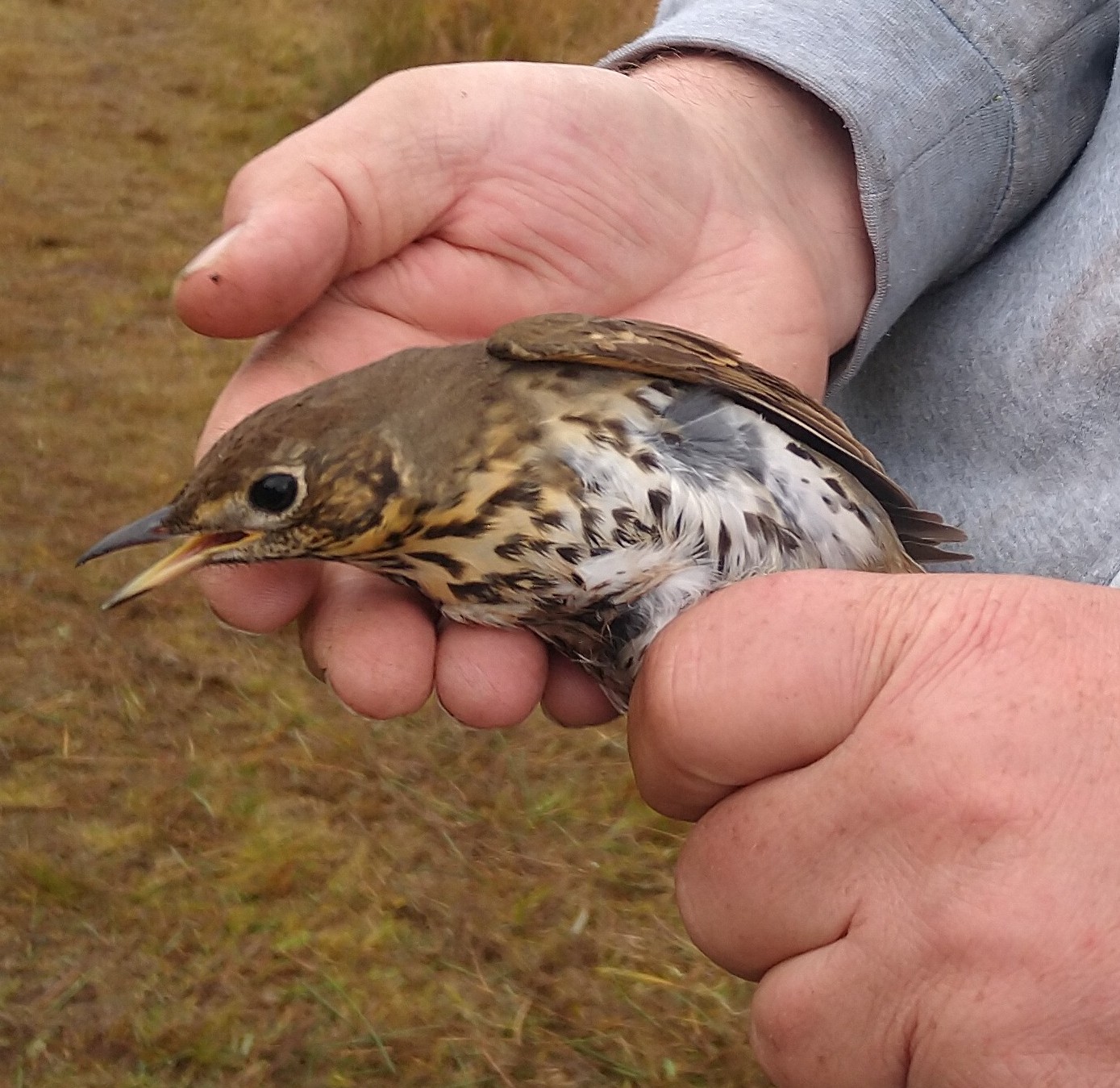
At the quayside at Utsira, I collected a bike that I had rented. I climbed aboard and set off into a headwind towards the Joker shop and Sildaloftet. After dropping off my baggage, I went up the bird-station and ringing woods. Truls and another bird-ringer were there and I got to accompany them on their rounds as they took birds out of the nets. They ringed Goldcrests, a Eurasian Blackcap, a Song Thrush and a Redstart. They also ringed two Chiffchaffs, one of which was a ‘tristis’, meaning that it came from the east (Siberia). Truls explained the difference and held both birds up at the same time so that I could study them. I would never have managed to see the difference between them in the field, but could see close up that there was a tiny difference in colour and size between them. Later I also got to see a Little Bunting there. They worked full on with a pot-pourri of birdsong to attract several different birds to them. Preferably something sensational. One of the songs was that of the White’s Thrush. It was certainly a wild dream for many to see one of these at Utsira. The bird is certainly recorded in October along the Norwegian coast, but it normally migrates to southeast Asia, according to bird-ringer Renate Berg and Store Norske Leksikon (SNL).
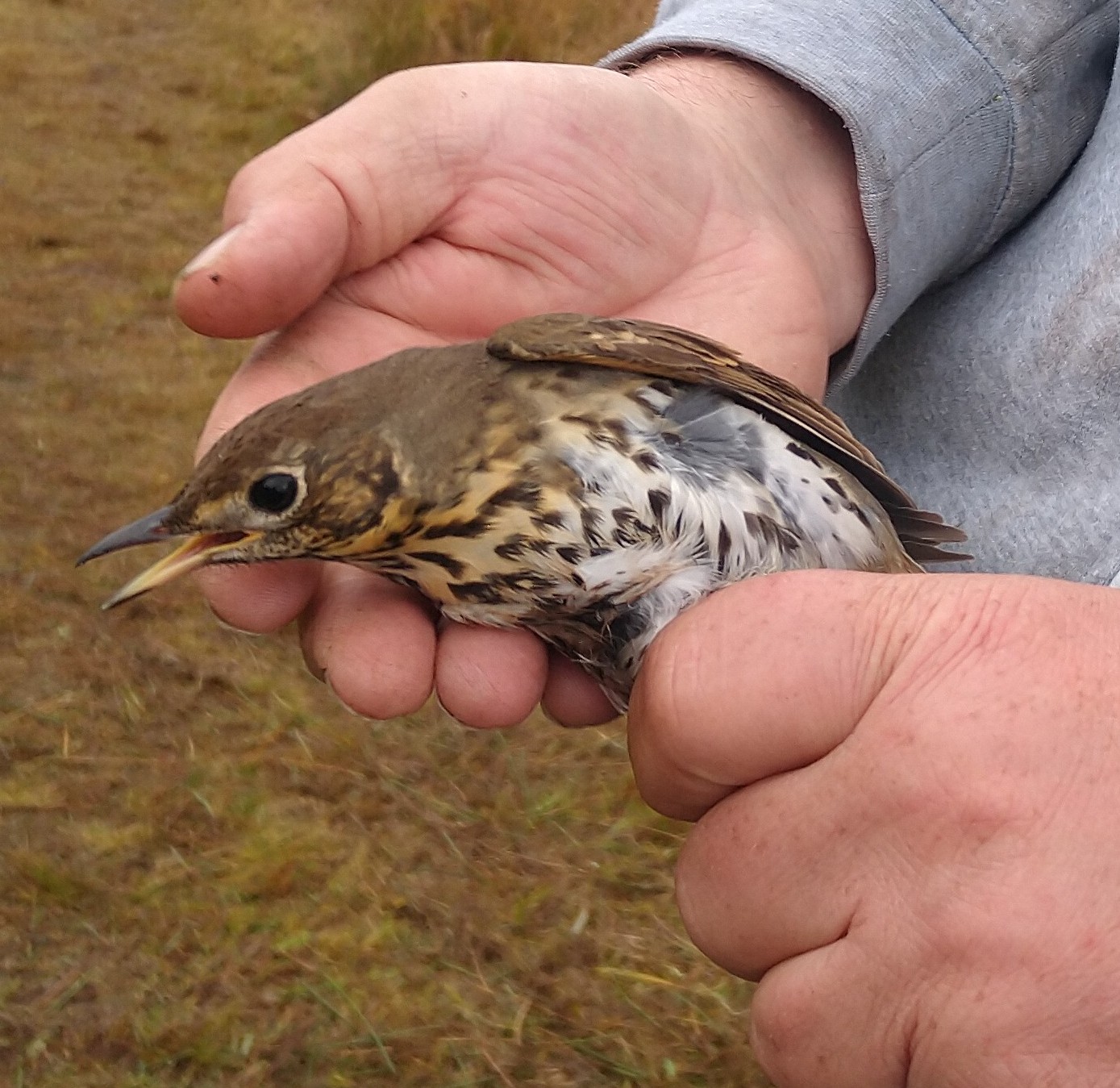
A song thrush (c) Ann Elisabeth Laksfoss Cardozo
Truls helped me to install the Band app ‘red alert for Utsira’ on my phone and I was ready to go. I received notifications and checked where they were. It is almost impossible to be on Utsira in ‘peak week’ without the Band app. When something interesting is posted, it quickly led to 40-50 menn and perhaps 2 women turning up at a garde, at Herberg, at the rubbish heap in the east (near the windmills), at the football pitch or in a garden near the shop where an Eastern Yellow Wagtail could be found. The advantage with Utsira is that it is a limited area because it is an island.
Some drive cars, others walk or cycle. My first notification that I checked out was a Red-flanked Bluetail. while this little bird sat on a fence with its tail folded up, it was really not easy to see that it was a Bluetail. It was explained to me that this was a young bird. When it flew off, it opened up its tail which was easily seen to be blue.
On the Friday morning, I asked if I could accompany ornithologist Kjetil Johannessen from Vestfold, who is the best in Norway at identifying birds by their song according to Truls. We drove around the island and he explained about and showed me some really good hedges and spots where you can often see many birds. He also told me about his main task which had to do with Eurasian Blackcaps and how some Magpies followed him so they could take the eggs from the nests he was mapping. Several other biologists in his time were supposed to have given up their studies in outright frustrations at this type of predation. Kjetil was the first to hear the Bluetail on 7th October on Utsira, near the stone barn. Everyone who was there at that time got to see the bird. It sat on a fence or in the bushes beside a red house near a stone barn (at the crossroads on the road up to the lighthouse).
With my expectations, I thought it was just as good to see a Yellow-browed Warbler. There were certainly several in the area, and the Horned Larks at Svartjordet were also totally amazing, being both well camouflaged and colourful simultaneously. In addition, they were quite considerate when it came to letting themselves be photographed. It was also fantastic to sit in the lee of the storm-hut out on a headland. At that point, I got to see ten Gannets which were gliding with the wind high up in the sky. They were scouting and descended. Always on the lookout for fish. As I was not too busy, I waited to see them dive. They folded their wings into their bodies and dived like torpedoes. I noticed the lovely, large, stiff wings with black points on their tips and their yellow heads. Imagine a Pelican in our waters! In the afternoon, I read the chapter on Gannets in The Seabird’s Cry: The Lives and Loves of Puffins, Gannets and Other Ocean Voyagers by Adam Nicolson (2018). Someone said that Gannets are actually quite uncommon as nesting birds in Norway, first being recorded at Runde in 1946, but according to SNL they are restricted to just a few areas.
On my way round the island on the culture trail to the west, I saw a Yellowhammer. It suddenly landed a couple of metres in front of me, and I had the chance to study it through my binoculars for several minutes. I was not one hundred percent certain that was what I had seen, but when the logs were recorded, another birder had heard a Yellowhammer near the lighthouse. And I had seen a bird below the lighthouse that was just about identical to a female Yellowhammer, according to Gyldendal’s bird guide, so that might well be true.
On the way from the culture trail, I suddenly noticed a raptor hunting another bird. I do not know enough about raptors, because I have mainly seen Sea Eagles. But, according to the logs, it was probably a Peregrine Falcon. And when I saw a hunting Peregrine Falcon at Revtangen a few days later (also confirmed by another birder), I concluded that I had now expanded my repertoire. I also saw three Crows, two of which were totally normal Hooded Crows, while the third was all black. I had never seen that before. If I had not seen it with the other two, I would have thought it was a Jackdaw. But they were the same size, and it was just that one was wholly black. As a black Crow was recorded that same evening, it is probable that I saw it.
Kjetil told me, by the way, that, one year when they were recording sightings, one person tried to claim to have seen two House Sparrows. This was voted down as highly improbable, because there was only one House Sparrow on the island. This story tells us a little about the limits on recording and which sightings are considered to be probable. There were a lot of estimates made while recording. 500 Starlings? More or fewer than yesterday? 2 Pink-footed Geese? I saw the Pink-footed Geese, and on top of those Little Buntings, Bramblings, Greenfinches, a Common Linnet, a Woodcock, several Ravens, 16 Eider Ducks (most in their winter feathers), some Chaffinches, 7 Siskins, White Wagtails, many Starlings, Redwings, lots of Cormorants, 2 Snipes (which I flushed out unexpectedly at Måkeskitsmyra out towards Pedleneset), quite a few Blackbirds, several Wrens, some Robins, a Swallow, one Red-breasted Flycatcher and a Spotted Flycatcher, severall Goldfinches, Northern Wheatears and Herons. I have finally understood just how large the sparrow family is. Naturally, I saw a lot of gulls, but don’t ask me what types they were! For the time being, I am only certain about Black-backed Gulls and Black-headed Gulls, even after several Gull evenings at Mostun with Øyvind Gjerde. Rosefinches, Radde’s Warblers, Dunnocks, Snow Buntings, Common Redpolls and Australasian Pipits were seen by others at Utsira while I was there.
It was also strange thinking about what I did not see. Not a single Magpie, no Blue Tits and Great Tits, no House Sparrows and no Tree Sparrows.
On a boat back from Utsira that was full to the gunwales with birders, we saw Gannets, Guillemots, a flock of what might have been Puffins (birders from Bergen thought so) and three pods of dolphins, which none of the birders could identify. But pictures were taken and someone suggested they were White-sided Dolphins. They were definitely not Porpoises though.
Conclusion: Utsira is a fantastic place to see birds and the peak week was an experience worth repeating. Many lovely and knowledgeable birders gathered together, which meant this 2K-en (a term used in Norwegian to describe a two-year old bird), as two birders from Østlandet called me because I began birdwatching two years ago, benefited hugely from the trip, both in terms of number of new birds spotted, and also in understanding a bit more of the birder’s world. From a demographic perspective, the event was dominated by older men, but there a few younger people, including families with children. And, when all is said and done, there is something fascinating about older people with several decades of experience, especially when they take the time to share that experience.
So, was the weather totally horrible? Not at all. There were two days with heavy rain (luckily Sildaloftet had a shoe drying rack), the Saturday was cloudy and the Sunday was beautiful weather with sun and almost no wind. It was not cold either.
So now I have become a member of Utsira bird station, and have bought a cap with a Yellow-browed Warbler on. And I am familiar with several more varieties of bird, even if I do like the normal types best of all.
Som relativt ny i NOF/Birdlife Norge, skulle jeg sjekke ut fugler og kryssermiljøet på Utsira i uke 40, 2021. Etter å ha lest flere kilder om fugler på Utsira og hørt om James Lawrence Chaworth-Musters (1901-1948) som fant sjeldne arter på Fair Isle og derfor hypotiserte at de samme jo måtte finnes på Utsira, ble øya nesten til en pilegrimsdestinasjon. Kunne kanskje jeg også få oppleve gulbrynsangeren i levende live?
Før jeg dro dit lurte jeg litt på hvordan jeg skulle finne fuglefolk der. Kanskje kom jeg til å luske rundt alene? Tenk om jeg verken fikk sett fugl eller folk? Og ville det være for røft og macho… og bare elendig vær? Så jeg tok kontakt med fuglemerkeren Truls W. Andersen på fuglestasjonen og han skrev en kjempehyggelig melding tilbake og ba meg sikre meg overnatting. Jeg valgte pensjonatet Sildaloftet siden det var stort, og sosialt, siden en skulle dele bad, kjøkken og stue. Så sjekket jeg programmet på nett og så at fra torsdag 7. oktober var det møter hver kveld. Da det var meldt stiv kuling utover ettermiddagen torsdag 7. oktober tok jeg båten fra Haugesund kl.11:00. Det ble en kjempeflott båttur.
(c) Ann Elisabeth Laksfoss Cardozo
Allerede på båten traff jeg flere fuglekikkere med kikkerter på magen og kamuflasjeklær. En fuglekikker hadde jeg sett før på NOF-turer på Jæren. Han sjekket fuglekunnskapen min gjennom å peke på en ærfugl i eklipse som jeg ikke klarte å identifisere. Men jeg mistet ikke motet av den grunn, og sa til ham at jeg var interessert i å se havsuler, så da tipset han meg om havsulene hver gang han så dem. Det var hyggelig gjort. De lå langt oppe på himmelen og selv med kikkert klarte ikke jeg å se at det virkelig var havsuler, men jeg satset på at jeg sikkert fikk sett havsuler på Utsira. Vi så to alker på vannet rett utenfor Vibrandsøy, og jeg lærte at det hadde hekket åkerrikser der. De er nå i sterk tilbakegang antagelig på grunn av endringer i jordbruket.
Gransangere (c) Ann Elisabeth Laksfoss Cardozo
På båten var det også en meget hyggelig gjeng fuglekikkere fra Odda-området. To søstre og fire menn. De klaget over at det var så lite fugl rundt Odda, og de hadde bare sett fem arter på forrige fugletur. Men de var gjengangere på Utsira og kom i kamuflasjeutstyr og med lange kameralinser. Dessuten var butikken Natur og Fritid representert med Jonas Langbråten fra Lista fuglestasjon. Dette tegnet bra.
På Utsira-kaia hentet jeg en sykkel som jeg hadde reservert. Jeg lastet på sykkelen og tråkket i vei i motvind mot Joker-butikken og Sildaloftet. Etter å ha satt fra meg, dro jeg opp til fuglestasjonen og merkeskogen. Der var Truls og en annen merker og jeg fikk gå noen runder med dem, mens de tok ut av nettene. De merket fuglekonger, en munk, en måltrost og en rødstjert. Og to gransangere, den ene var en «tristis» dvs. at den kom østfra (Sibir). Truls forklarte forskjellen og holdt begge fuglene opp samtidig slik at jeg kunne studere dem. Jeg ville aldri klart å se forskjell på dem i felt, men så at det var en liten nyanseforskjell i farge og størrelse. Senere fikk jeg også sett en dvergspurv der. De kjørte full guffe på med potpurri-fuglesang for å tiltrekke seg flere fugler. Gjerne «bomber». Den ene lyden var av gulltrost. Det var visstnok en vill drøm for flere å få sett den på Utsira. Fuglen er riktignok registrert i oktober langs norskekysten, men trekker normalt til Sørøst-Asia ifølge ringmerker Renate Berg og Store Norske Leksikon (SNL).
Måltrost (c) Ann Elisabeth Laksfoss Cardozo
Truls hjalp meg med å installere Band-appen «bombevarsel for Utsira» og så var jeg i gang. Jeg fikk varsler og sjekket hvor de var. Det går nesten ikke an å være på Utsira i «bombeuka» uten Band. Når noe interessant ble postet, førte det fort til at 40-50 menn og kanskje 2 damer, plutselig troppet opp ved en hage, ved Herberg, ved søppelhaugen i øst (mot vindmøllene), på fotballbanen eller i en hage nær butikken der en østlig gulerle holdt til. Fordelen med Utsira er at det er et begrenset område siden det er en øy.
Noen kjører bil, andre går eller sykler. Mitt første varsel som ble sjekket ut var blåstjerten. Mens denne lille fuglen satt på gjerdet med stjerten igjen-kneppet, var det jammen ikke lett å se at det var en blåstjert. Jeg fikk forklart at det var en ungfugl. Når den fløy åpnet den stjerten som var lett blålig.
Fredag morgen spurte jeg om jeg gå med ornitolog Kjetil Johannessen fra Vestfold, som ifølge Truls er den flinkeste i Norge når det gjelder å gjenkjenne fugler på lyd. Vi kjørte en runde rundt øya og han forklarte og viste noen ekstrafine hager og steder hvor en ofte kan se mange fugler. Han fortalte også om hovedoppgaven sin som omhandlet munk og hvordan noen skjærer fulgte ham for å ta eggene i redene han kartla. Flere andre biologer på hans tid skal ha gitt opp studiene i ren frustrasjon over denne type predasjon. Det var Kjetil som først hørte blåstjerten 7.oktober på Utsira, ved steinlåven. Alle som var på Utsira de dagene, fikk sett fuglen. Den satt på gjerdet eller i buskene ved et rødt hus nær en steinlåve (i krysset ved veien opp til fyret).
Med mine forutsetninger, syntes jeg det var like gildt å se gulbrynsangeren. Det fantes visstnok flere i området, og fjell-lerkene på Svartjordet var også helt utrolige, så godt kamuflert og likevel så fargerike. De var i tillegg ganske hensynsfulle når det gjaldt å la seg fotografere. Det var også helt fantastisk å sitte i le av stormhytta ute på et nes. Da fikk jeg sett 10 havsuler som fløt med vinden høyt oppe på himmelen. De speidet og seilte nedover. Evige fiskere. Siden jeg ikke hadde det travelt, ventet jeg for å se dem stupe. De foldet vingene inntil kroppen og stupte som torpedoer. Jeg la merke til de flotte, svære, avstivede vingene med svart ytterst og de gulaktige hodene. Tenk en pelikanfugl i våre farvann! Om ettermiddagen leste jeg kapittelet om havsulene i Sjøfuglenes skrik av Adam Nicolson (2018). Noen sa at havsulene egentlig er noe uvanlige som hekkende i Norge, først på Runde fra 1946, men ifølge SNL har de begrenset hekking her.
På vei rundt øya på kulturstien mot vest så jeg en gulspurv. Den satte seg plutselig ned et par meter foran meg, og jeg fikk mulighet til å studere den i kikkerten i flere minutter. Jeg var jo ikke helt hundre prosent sikker på at det faktisk var det jeg hadde sett, men da det ble ført logg, hadde en annen fuglekikker hørt en gulspurv ved fyret. Og jeg hadde sett en fugl nedenfor fyret som var nokså identisk med hunnfugl av gulspurv ifølge Gyldendal, så da kunne det vel stemme?
På vei ut fra kulturstien ble jeg plutselig oppmerksom på en rovfugl som jaktet en annen fugl. Jeg kan ikke nok om rovfugler, da jeg hovedsakelig har sett havørner. Men ifølge loggen var det nok en vandrefalk. Og da jeg noen dager senere så en jagende vandrefalk på Revtangen – også bekreftet av en annen fuglekikker, tenkte jeg at nå har jeg fått utvidet repertoaret. Jeg så også tre kråker, der to var helt vanlige, men den tredje var helt svart. Det har jeg aldri sett før. Om jeg ikke hadde sett den med de to andre, hadde jeg nok tenkt at det var ei kaie. Men altså, de var samme størrelse, bare at den ene var svart. Siden det ble logget svartkråke samme kveld er det sannsynlig at jeg også så den.
Kjetil fortalte forresten at under loggen et år hadde en person forsøkt seg med at han hadde sett to gråspurver. Det ble nedstemt som totalt usannsynlig, siden det bare fantes én gråspurv på øya. Det sier litt om grensene for loggføring og hva som ble ansett for sannsynlig å se. Det ble mange estimat under loggføring, 500 stær? Flere, færre enn i går? 2 kortnebbgjess. Jeg så kortnebbgjessene, og i tillegg dvergspurv, bjørkefink, grønnfink, en tornirisk, rugde, flere ravn, 16 ærfugl (de fleste i vinterdrakt), noen bokfinker, 7 grønnsisik, linerler, mange stær, rødvingetroster, mange storskarv, to bekkasiner (som jeg skremte opp i Måkeskitsmyra og ut mot Pedleneset) en del svarttroster, mange gjerdesmetter, noen rødstruper, en låvesvale, en dvergfluesnapper og en gråfluesnapper, flere stillitser, steinskvett og gråhegre. Jeg har endelig skjønt hvor stor spurvefamilien er. Jeg så selvsagt mange måker, men ikke spør meg om hvilke. Foreløpig er jeg bare helt sikker på svartbaker og hettemåker, selv etter flere måkekvelder på Mostun med Øyvind Gjerde. Både rosenfink, viersanger, jernspurv, snøspurver, gråsisik og tartarpiplerke ble sett av andre på Utsira i samme tidsrom.
Det var også litt rart å tenke på hva jeg ikke så. Ikke en eneste skjære, ingen blåmeiser og ingen kjøttmeiser ingen gråspurv og ingen pilfink.
På den stappfulle båten hjem fra Utsira så vi havsuler, lomvier, en flokk som kanskje var lundefugl (fuglekikkere fra Bergen mente det) og tre flokker med delfiner, som ingen av fuglekikkerne klarte å identifisere. Men bilder ble tatt og noen foreslo kvitskjeving. De var små og hoppet ikke høyt, og var lysere under magen. Det var definitivt ikke niser.
Konklusjon: Utsira er et fantastisk sted å se på fugler og bombeuka var en opplevelse som frister til gjentagelse. Masse kjekke og flinke fuglefolk samlet, noe som gjorde at denne 2K-en – som to fuglekikkere fra Østlandet kalte meg, siden jeg begynte å se på fugler for to år siden, fikk stort utbytte av turen både med tanke på antall nye arter, men ikke minst, med tanke på å forstå litt mer av kryssernes verden. Demografisk var det overvekt av eldre menn, men også noen yngre inkludert familier med barn. Og når det er sagt, så er det noe meget fascinerende med godt voksne som har flere årtier med erfaring – særlig når de gidder å dele.
Og været var det helt horribelt? Neida, to dager med høljregn (men Sildaloftet hadde skotørkestativ), lørdagen var overskyet og søndagen var helt nydelig med sol og nesten vindstille. Ikke var det kaldt heller.
Så nå har jeg blitt medlem av Utsira fuglestasjon, og har kjøpt caps med gulbrynsangeren på. Jeg er klar for flere fuglearter – selv om jeg liker de helt vanlige fugleartene aller best.
by Wessel Ganzevoort, Elin Lundquist, Elle-Mari Talivee and Ágota Ábrán
EuroBirdwatch, which took place this year on the 2nd and 3rd of October, started in 1993 as a spinoff of the World Birdwatch founded in the same year[1]. All across Europe volunteers gather to track bird migration. The aim of the event is to understand the absolute and relative number of birds making use of different national and international autumn migration routes. By collecting these data in the same standardized way for almost 30 years now, these data help us to gain insight into which birds are achieving greater or lesser success in their migration across Europe.
As a secondary purpose, however, EuroBirdwatch also functions as an ‘open day’ for many bird groups involved in migration counts; these migration counts take place all across autumn, and EuroBirdwatch is an opportunity for interested individuals and families to experience bird migration and birding, and can perhaps even function as an entry point for becoming a birder.
For these reasons, the event is highly relevant for EnviroCitizen, so it is no surprise that several of our fieldworkers joined in for the event. Below, we give a quick window into some of our experiences.
Fieldwork Flash – Netherlands
by Wessel Ganzevoort, Radboud University
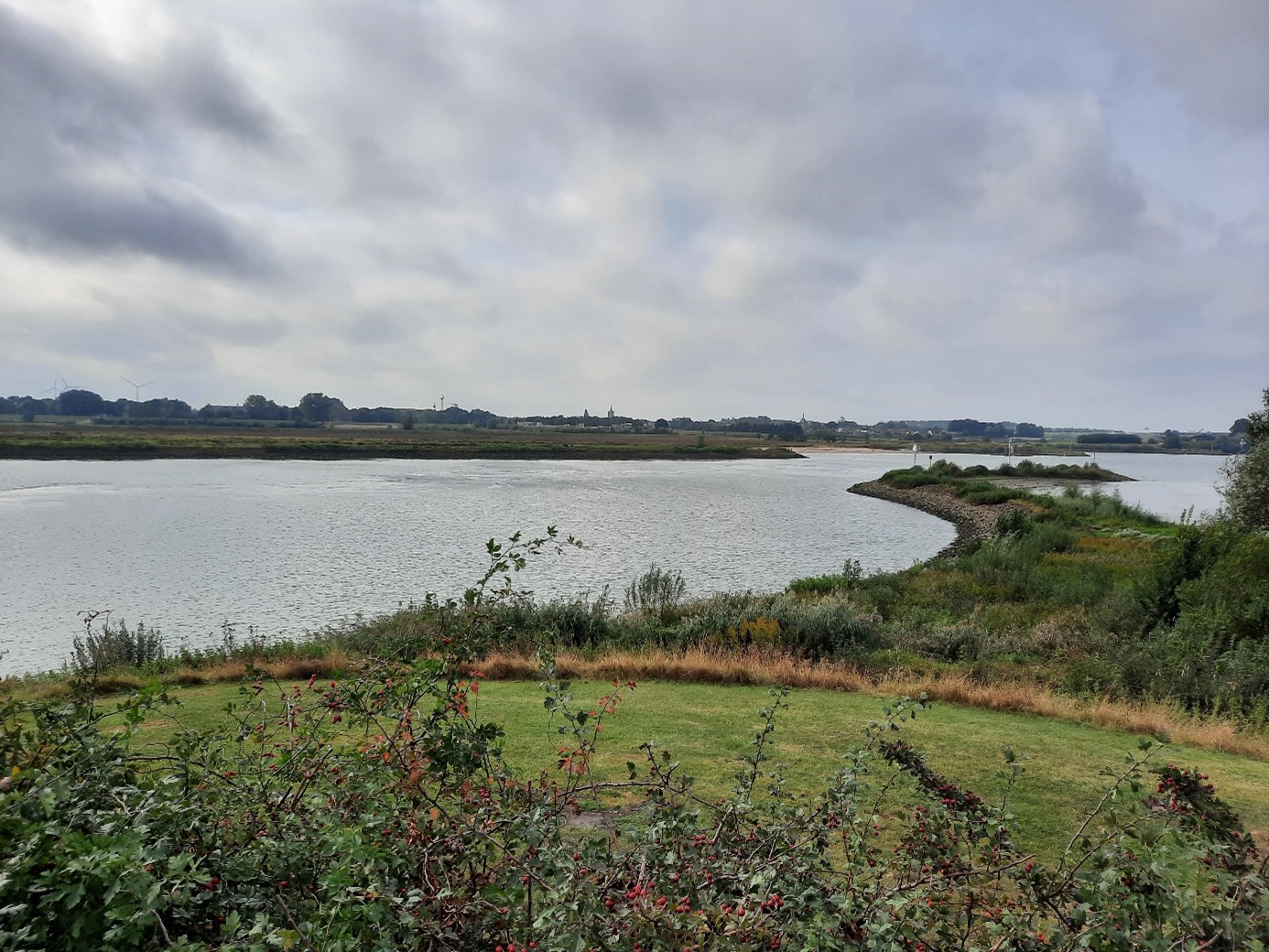
The Netherlands is an important country for bird migration, and in 2021 three birds stood out in terms of numbers: Common starling, Meadow pipit, and Common chaffinch[2]. When I joined on Saturday we indeed encountered many of these birds, as well as others like the Eurasian jay, many geese and cormorants. And of course some exciting rarer finds like the great egret and a common buzzard.
My counting location was located along a river in the centre of the country. A group of around 10 birders, both highly experienced and beginners, gathered in the morning. Counting lasted to about 13:00; all throughout the morning some people left and others joined up, making for a low-threshold experience. Another factor that helped things along was the perfect weather: no rain, a soft breeze, some clouds and pleasant temperature. Fog and rain would not only make the birds difficult to observe, it would also make it unlikely that people would pop by.
As a beginning birder, EuroBirdWatch was a nice opportunity to test out my new binoculars, which offer a whole new way of experiencing passing birds. Of course, they were no match for the impressive scopes wielded by the experienced birders. For a beginner, you sometimes are left desperately trying to spot a distant bird that only a scope detects.
by Elin Lundquist, Swedish University of Agricultural Sciences
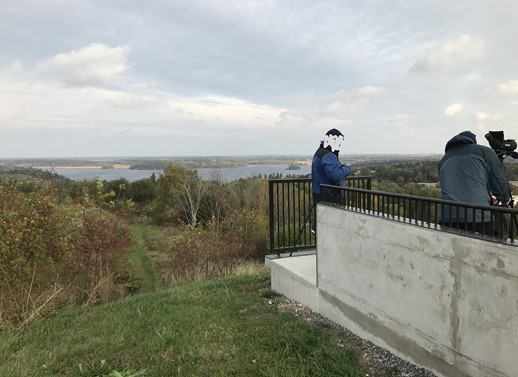
During the EuroBirdwatch weekend there were activities at at least 40 places around the country. They were aimed at the public and organized by regional ornithological associations and local bird clubs. I joined one of several events in the Stockholm area and went to an observation platform in a suburb of Stockholm with a view over a lake. It was a quite chilly and windy autumn day. Present at the platform was a guide from a local bird club; an experienced birdwatcher who lives close by and counts migrating birds at the location regularly. Besides me, there were two other participants that identified themselves as beginners.
The guide generously shared his knowledge of birds and of the area and got engaged questions from the participants. The guide indicated early on that it would probably be a quite calm day birdwise. Altogether we noticed almost 40 different species until the count ended at around 11:00.
In Sweden as a whole Chaffinch was the most commonly reported species during the weekend. BirdLife Sweden summarized EuroBirdwatch 2021 by stating that there were quite high numbers of migratory birds noted in the country. However, there were not as many birds on the move as during those years when the counts have coincided with the peak days of the geese migration.[3] Here is a link to the complete result of EuroBirdwatch in Sweden: https://artportalen.se/EuroBirdwatch
Swedish EuroBirdWatch spot. Photo: Elin Lundquist
Fieldwork Flash – Estonia
by Elle-Mari Talivee, Estonian Academy of Sciences
EuroBirdwatch in Estonia was a success: observers spotted 270,684 birds of at least 156 species; common chaffinches, common wood pigeons, Eurasian siskins, European starlings and greater scaups were seen most.
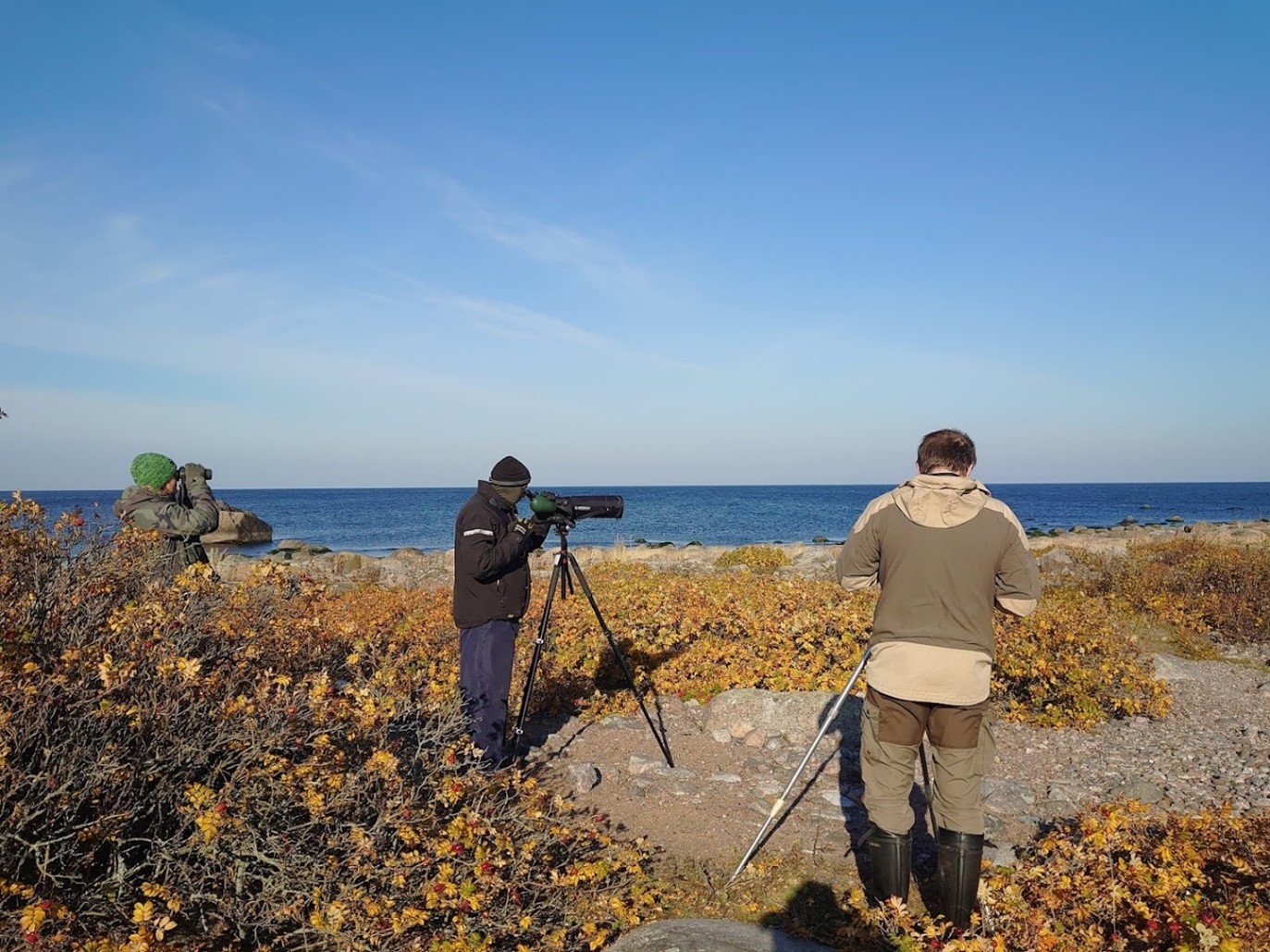
As BirdLife Estonia and the organisation of Estonian birders called Estbirding jointly offered birdwatching in groups with instructors in several places all over Estonia, there was the possibility to watch seabirds in the northernmost land point of Estonia, the Purekkari cape, on Sunday morning. The weather was fine: although cold, it was sunny. The stony cape stretches quite far into the Gulf of Finland. I stood for about an hour in the middle of migrating brent geese, with long-tailed ducks and loons passing on the horizon. There were four of us at that time, together with the instructor. I had just missed an otter who had slept lazily on a stone in the sea, and a short-eared owl, and made a silent promise to myself to learn from this experience and wake up earlier in the future.
Walking away from the beach through the pine forest, suddenly a flock of long-tailed tits surrounded us. Their high-pitched pit is an easy characteristic to identify this species by. These lovely birds with white heads, black eyes and long tails are calling each other to keep the flock together, and if a bird becomes separated from the group, they call louder. The cherry on the cake, to meet such a cute fellowship…
Estonian EuroBirdwatch spot. Photo: Elle-Mari Talivee
Fieldwork Flash – Romania
by Ágota Ábrán, New Europe College
The Romanian Ornithology Society organised a birdwatching marathon with the Marine Biology Station in Agigea for EuroBirdwatch[4]. The station houses the Agigea Ringing Station for Migration Studies[5], which seems to cluster together as volunteers many bird lovers from across the country. It is located near the Black Sea beach of Agigea village, next to the county capital Constanța. As our team of four adults and a child arrived on the evening of the 1st of October, we found people amicably chatting outside amongst comfortable looking garden chairs. The organizers drew a competition perimeter, which went as a thin strip 12 kilometres to the south, included the Lake Techirghiol, and a wider strip to the north for about 70 kilometres, including a tiny part of the Danube Delta Biosphere Reserve.
Fortunately, two of my teammates were more experienced and prepared in both birdwatching and knowledge of the area. We set forth at 7 AM on the 2nd with a camera, three binoculars and a scope by car and drove to the south and then north, often stopping at known birdwatching spots. The species with the most individual counts of the marathon were starlings, black-headed gulls and mallards[6]. We also saw many waders that I could differentiate only after long explanations and checking in the bird guide. By the end of the day, we saw some exciting places and counted 71 bird species; among them we got a glimpse of the flamingos, which were all over the news this year.
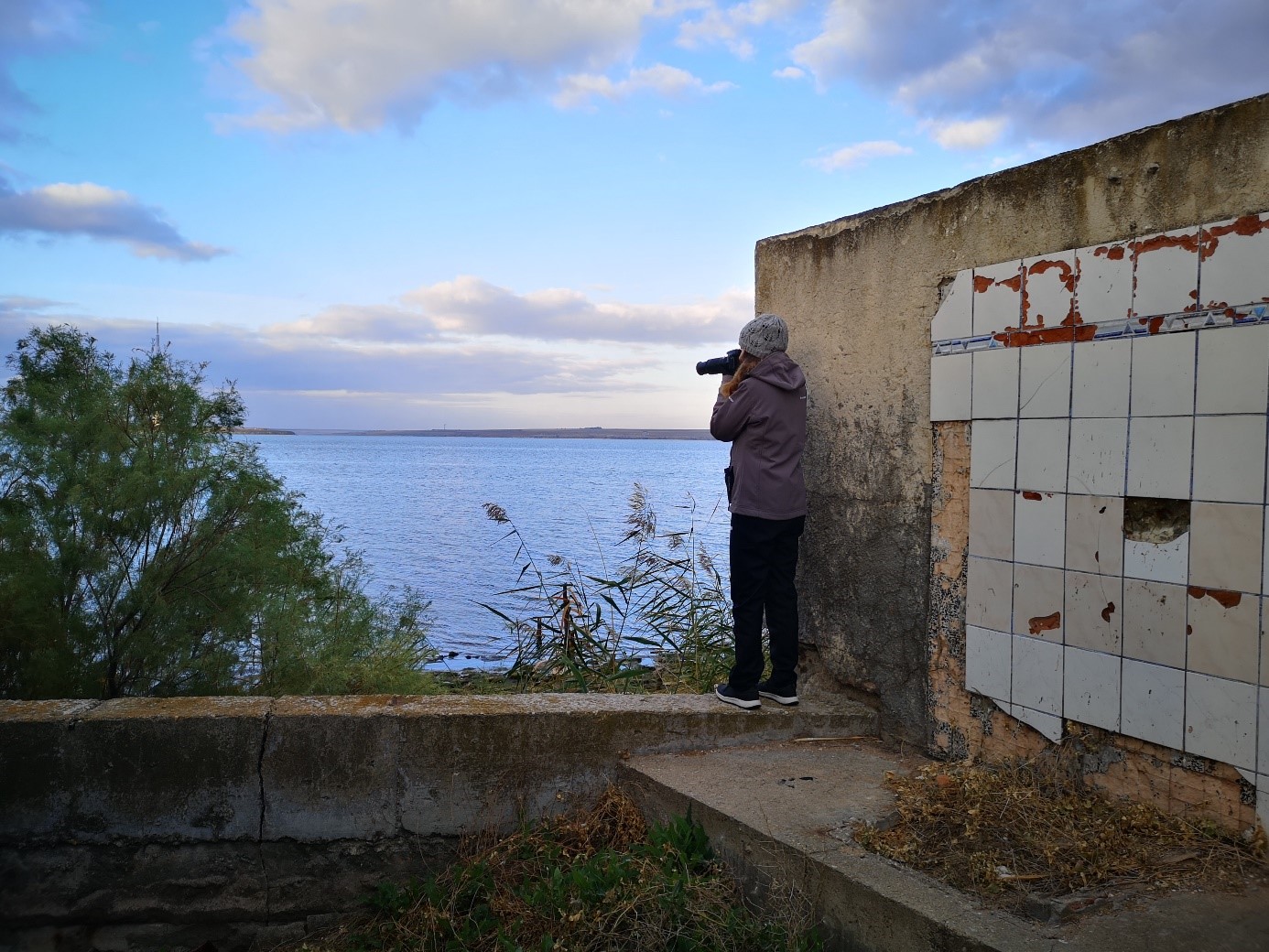
Looking at birds in the cover of the ruins of a bath – Lake Techirghiol, Romania. Photo: Ágota Ábrán
Høsttrekket er i full gang. Fuglene reiser sørover, og mange legger trekket langs Jærkysten. Plutselig blei det tjukt av bjørkefink i skogen, mens meiser og fuglekonger har begynt å samle seg i blandingsflokker for vinteren. De siste par ukene har det vært horndykkere ved Stora Stokkavatn, lappspove og tundralo langs Jærstrendene og alskens lommer og alkefugler ute i havgapet.
Lappspover. (c) Endre Harvold Kvangraven
Mens fuglene forlater oss, kommer vandreutstillinga «Fuglar i lyrikken», produsert av Nynorsk kultursentrum, til Universitetsbiblioteket i Stavanger. I den sammenheng blir det Steffens-salong om «Litterære trekkfugler» den 28. oktober, da UiS-professor Benedikt Jager møter forleggerne Eirik Bø og Sebastian Guggolz til samtale om tysk-norsk kulturutveksling og den nye Tarjei Vesaas-bølgen i Tyskland. I november arrangerer så biblioteket, i samarbeid med the Greenhouse og EnviroCitizen, workshopen «Migratory birds, migratory words», der Ann Elisabeth Laksfoss Cardozo presenterer funn om norsk folkeforskning, og jeg forteller om fugler i nyere norsk skjønnlitteratur. Fullt program kommer snart.
Mens vandrefalk og havørn vekker ærefrykt og undring, bringer ravn og kattugle varsler fra det hinsidige. Fargesprakende stillitser er innbegrepet av skjønnhet, men når de fanges og settes i bur, blir de bilder på sorg og fortvilelse. I forskninga mi på fugler i nordisk litteratur har jeg oppdaga at omsorg er et sentralt tema. Det gjelder ikke bare den utbredte omtanken for natur og miljø, for sjeldne arter og sårbare økosystemer, som ofte medfører det vi kaller økosorg, men også medfølelse med individer og flokkene de tilhører. Fra Kjersti Ericsson til Gøhril Gabrielsen, Brit Bildøen, Merethe Lindstrøm og til og med Karl Ove Knausgård, brukes fugler til å belyse tematikk knytta til fødsel og død. Gjennom hekketid og vinterfôring, gjenspeiles menneskers personlige utfordringer i fuglers kamp for å overleve.
Sandstrender langs Jærkysten. (c) Endre Harvold Kvangraven
Det andre hovedtemaet som gjør seg gjeldende er den fremmedgjorte, nevrotiske, tilsynelatende autistiske outsideren som føler ei dyp tilknytning til og dragning mot naturen. Kroneksemplet på dette er Mattis i Vesaas’ Fuglane, som har sitt moderne motstykke i Knut Hovin i Agnar Lirhus’ Nå hogger de. Lignende karakterer går igjen i en rekke romaner, fra Ingvar Ambjørnsen til Carl Frode Tiller, om skikkelser som lengter etter forsoning, men drives på flukt.
Dette er noen av temaene vi skal utforske den kommende måneden.
Litteratur Ambjørnsen, Ingvar. 2012. Natten drømmer om dagen. Oslo: Cappelen Damm. Bildøen, Brit. 2019. Tre vegar til havet. Oslo: Samlaget. Bildøen, Brit. 2020. Over land og hav : eit år med trekkfuglar. Oslo: Kagge Forlag. Gabrielsen, Gøhril. 2017. Ankomst. Oslo: Aschehoug. Knausgård, Karl Ove. 2019. Fuglene under himmelen. Med bilder av Stephen Gill. Oslo: Forlaget Oktober. Lindstrøm, Merethe. 2019. Fuglenes anatomi. Oslo: Forlaget Oktober. Lirhus, Agnar. 2020. Nå hogger de. Oslo: Forlaget Oktober. Ravatn, Agnes. 2013. Fugletribunalet. Oslo: Samlaget. Tiller, Carl Frode. 2017. Begynnelser. Oslo: Aschehoug. Vesaas, Tarjei. 2007 (1957). Fuglane. Oslo: Gyldendal.
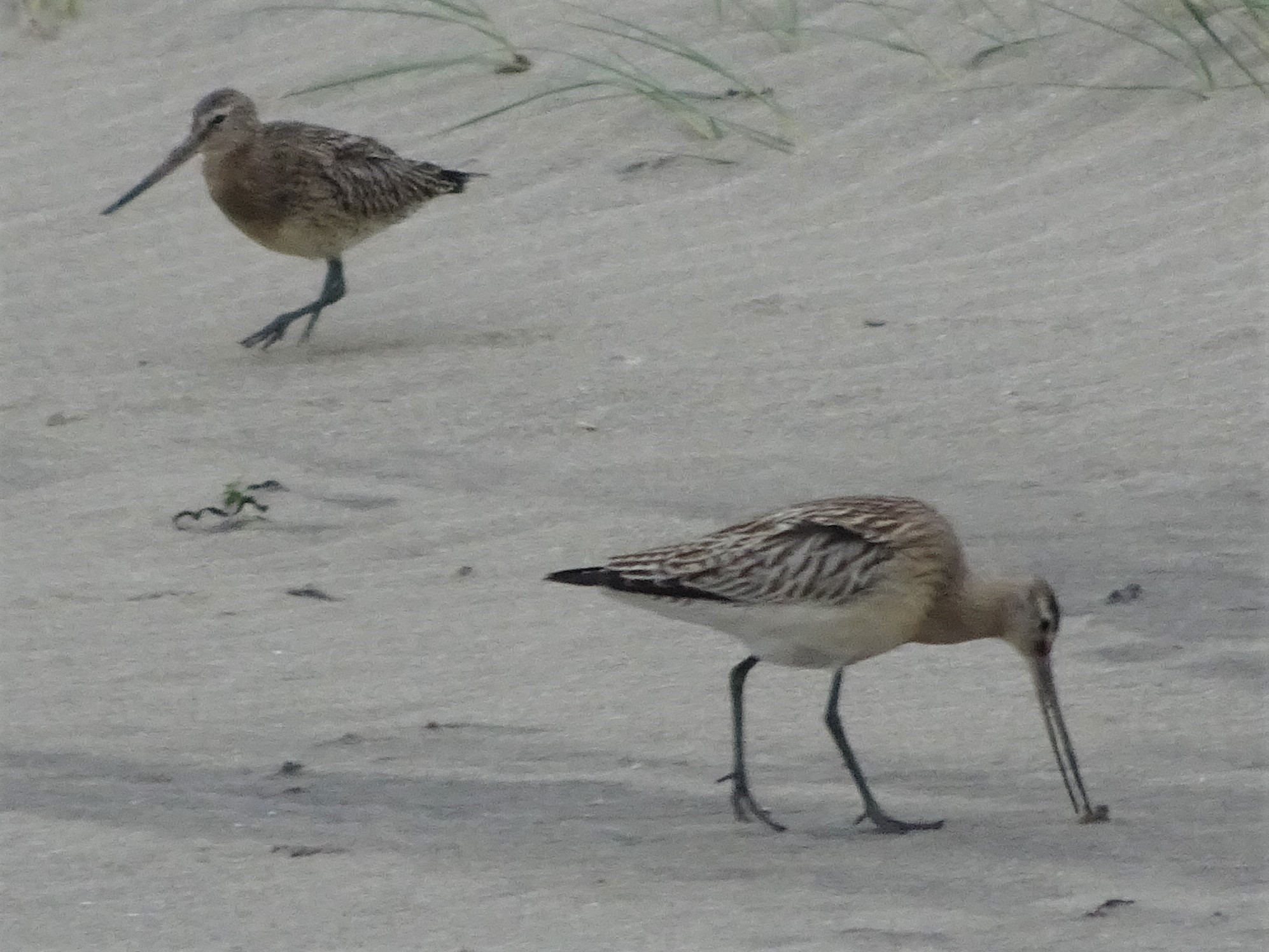
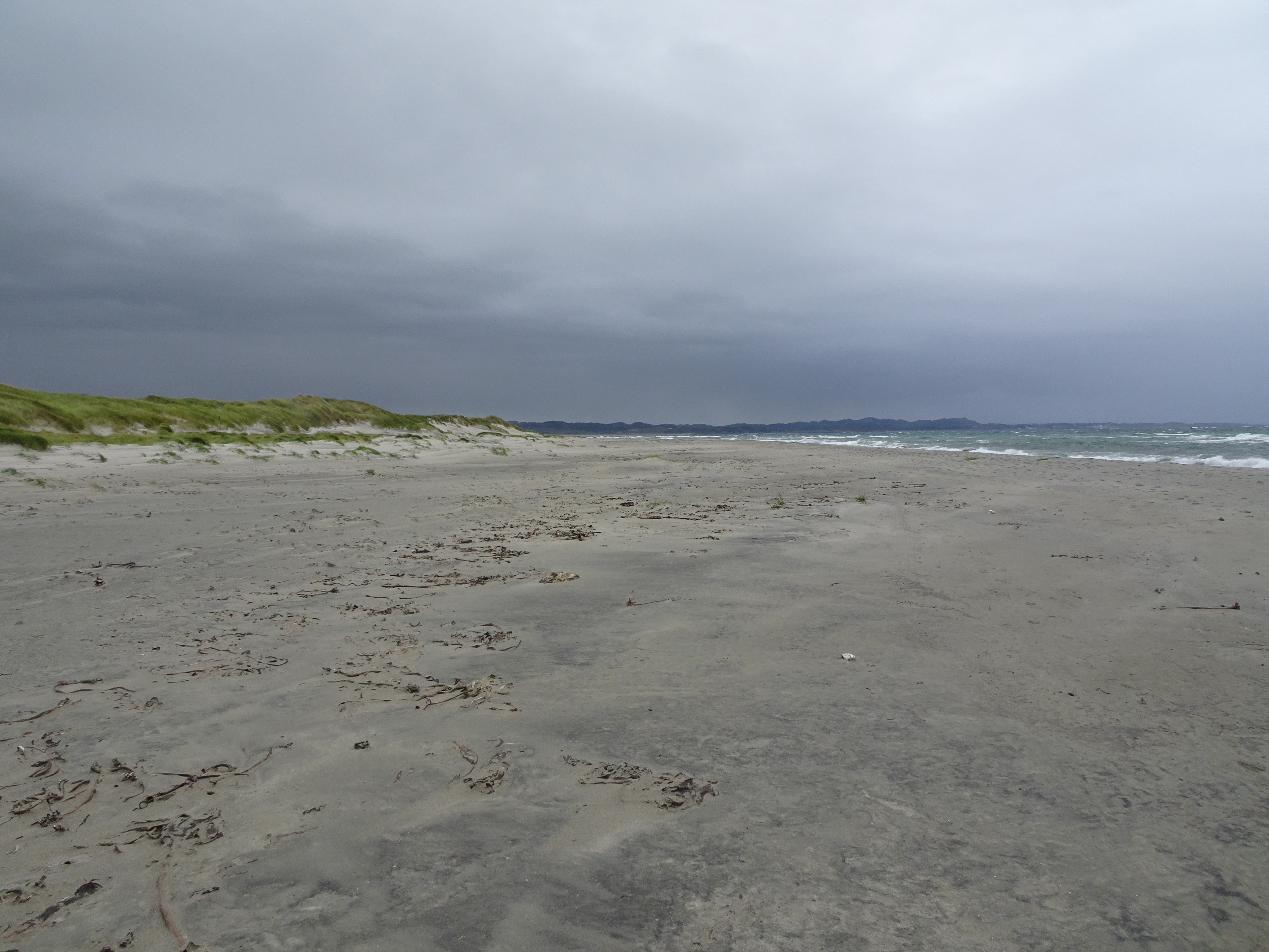
Fall migration is upon us. Birds are headed south, and here in Stavanger we’re at the heart of their westerly migration routes. All at once the woods filled with flocks of Bramblings, while tits and Goldcrests began to gather in mixed flocks for the winter. These past couple of weeks there have been Horned Grebes at Stora Stokkavatn, Grey Plovers and Bar-tailed Godwits on the beaches by Brusand, and a range of divers and auks out on the open water.
Bar-tailed godwits (c) Endre Harvold Kvangraven
As the birds are leaving, the exhibition “Fuglar i lyrikken” is coming to Stavanger University Library, showcasing birds in Norwegian poetry. On October 28th, Professor Benedikt Jager will join publishers Eirik Bø and Sebastian Guggolz for “Litterære trekkfugler”, a discussion about literary cultural exchange between Norway and Germany, including the resurgence of interest in Tarjei Vesaas. In November, the library will host a workshop in collaboration with the Greenhouse and EnviroCitizen, where Ann Elisabeth Laksfoss Cardozo will be presenting her findings about citizen science in Norway, and I’ll be discussing the role of birds in modern Norwegian literature. Keynote speakers are soon to be announced. While Peregrine Falcons and White-tailed Eagles inspire awe and wonder, Ravens and Tawny Owls appear as messengers from the spirit world. Goldfinches, clad in dazzling colours, personify beauty, but captured and caged, they embody only gloom and sorrow. In my research on birds in Nordic literature, I’ve found that a central theme in novels where birds feature is that of care, not only for species, ecosystems and the environment broadly defined, but also for individuals and flocks. From Kjersti Ericsson to Gøhril Gabrielsen, Brit Bildøen, Merethe Lindstrøm, even Karl Ove Knausgård, birds are used to explore themes related to birth and death. Through breeding season and winter feeding, human characters see their personal battles reflected in birds’ struggle to survive.
Migratory flyway (c) Endre Harvold Kvangraven
Another central motif is that of the alienated, neurotic outsider who experiences a deep connection with wild creatures, especially birds. Prime examples are Mattis in Vesaas’ classic The Birds, and his counterpart Knut Hovin in Agnar Lirhus’ recent novel Nå hogger de. Similar characters appear in a range of novels, from Ingvar Ambjørnsen through to Carl Frode Tiller, stories of desperate antiheroes who long for reconciliation but are driven to despair, to flight.
These are some of the topics we’ll be touching on this coming month.
References Ambjørnsen, Ingvar. 2012. Natten drømmer om dagen. Oslo: Cappelen Damm. Bildøen, Brit. 2019. Tre vegar til havet. Oslo: Samlaget. Bildøen, Brit. 2020. Over land og hav : eit år med trekkfuglar. Oslo: Kagge Forlag. Gabrielsen, Gøhril. 2017. Ankomst. Oslo: Aschehoug. Knausgård, Karl Ove. 2019. Fuglene under himmelen. With photographs by Stephen Gill. Oslo: Forlaget Oktober. Lindstrøm, Merethe. 2019. Fuglenes anatomi. Oslo: Forlaget Oktober. Lirhus, Agnar. 2020. Nå hogger de. Oslo: Forlaget Oktober. Ravatn, Agnes. 2013. Fugletribunalet. Oslo: Samlaget. Tiller, Carl Frode. 2017. Begynnelser. Oslo: Aschehoug. Vesaas, Tarjei. 2019 (1957). The Birds. Translated by Torbjørn Støverud and Michael Barnes. London: Penguin Books.
door Helen Verploegen, PhD onderzoeker naar het rouwen om verloren biodiversiteit, Centre Connecting Humans and Nature, Institute for Science in Society (Radboud Universiteit)
Tot een paar jaar geleden had ik weinig oog voor de natuur. De overvloed aan Putters die door het stadscentrum van Nijmegen vliegen of de biddende Buizerds boven het Goffertpark gingen volledig aan mijn aandacht voorbij. Ik kon nauwelijks een Roodborst of Merel in de tuin herkennen en merkte ze alleen op als ze mijn aandacht afdwongen door dichtbij te komen of veel geluid te maken. De laatste jaren is er iets veranderd; vogels raken me nu.
Dankzij de Britse geograaf Jamie Lorimer raakte ik bekend met het concept learning to be affected. In het Nederlands moeizaam vertaald naar zoiets als ‘het leren om je geraakt te voelen’, in dit geval door de natuur. Zijn boek ‘Wildlife in the Anthropocene: Conservation after nature’ [1], is een belangrijk werk voor mijn onderzoek naar het rouwen voor uitstervende vogelsoorten. Hij beschrijft learning to be affected als het proces waarbij ons lichaam zich afstemt op de vormen en dynamieken van een organisme of de ecologie. Maar hoe ziet dit abstracte proces er in levenden lijve uit?
Het Engelse concept ‘affect’, het emotionele geraakt voelen, moet gezien worden als iets relationeels. Je kunt alleen geraakt worden in relatie tot iets, bijvoorbeeld tot een ander persoon, een object, of een ander niet-menselijk organisme zoals een dier of plant. Mijn affectieve relatie met vogels is voortgekomen uit mijn affectieve relatie met mensen. Mijn beste vriendin en huisgenoot tijdens mijn studie, was de eerste persoon die mijn liefde voor de natuur wist op te roepen. Op avondwandelingen door onze studentenstad Maastricht of op een van onze vele buitenlandse vakanties, bracht zij vaak haar verrekijker mee – soms ook een extra paar voor mij – en wees naar de Buizerds boven de Pietersberg of de vlinders in de Spaanse bergen. Een paar jaar geleden stelde ze me voor aan de vogelaar en ecoloog die nu mijn vriend is. Zijn liefde en enthousiasme voor vogels zijn aanstekelijk en we besteden samen veel tijd in de natuur. Op onze dagelijkse wandelingen door de polder of het bos wijst hij mij op allerlei bewegingen en geluiden die ik eerder nooit zou hebben opgemerkt. In de woorden van Anna Tsing, noticing is an art [2]. Hij is een meester in deze kunstvorm en ik slechts een beginnende student. Zoals Lorimer beschrijft, kost het jaren van training en ervaring om een lichaam zo te kalibreren dat je je geraakt voelt door de natuur. Mijn vriend is al 20 jaar vogelaar. Zijn kennis van determineren en ecologie ontwikkelde hij in het veld en in interacties met andere vogelaars. Ik sta nog aan de start van dit langzame kalibratieproces.
Tijdens dit kalibratieproces heeft angst plaatsgemaakt voor nieuwsgierigheid. Geluiden vanuit de bosjes zouden mij eerder hebben doen opvliegen van schrik – als ik het überhaupt opmerkte. Nu maakt het me nieuwsgierig. Steeds vaker merk ik dat ik tijdens een wandeling plotseling stop als ik gekwetter in de verte hoor of bewegingen in de bosjes opmerk. De verrekijker die over mijn schouder hangt helpt me in het kalibratieproces. Ze zijn als het ware een verlenging van mijn zintuigen, waardoor ik vogels en andere soorten kan zien die moeilijk waar te nemen zijn met het blote oog. Ik beweeg langzamer en stiller om mijn aanwezigheid zo lang mogelijk geheim te houden. Lorimer maakt de treffende vergelijking met een jager die naar zijn prooi kijkt.
Zodra de ‘prooi’ in zicht is, borrelt de vraag op: wat is het? Ik worstel met vogelnamen. Tijdens wandelingen met mijn vriend vraagt hij regelmatig of ik vogels herken. Mijn grote moeite om vogelnamen te onthouden kan af en toe leiden tot frustraties[1]. Gelukkig helpen verhalen hierbij: die ene vogel die klinkt als een lied van Beethoven (Geelgors) of die vogel die vaak in bomen met besjes zit (Pestvogel). Ondanks de frustraties haal ik ook vreugde uit determineren, iets wat Lorimer linkt aan het zogeheten ‘corporeal charisma’. Het juist determineren voelt als een prestatie en een formele introductie. Het vergeten van de naam bij de volgende ontmoeting vrijwel net zo gênant als het vergeten van de naam van iemand die je net hebt ontmoet.
Maar wat maakt het uit dat ik me nu geraakt voel door vogels? Wat zijn de consequenties? Volgens Lorimer is het een proces waarbij je je afstemt op de natuur, luistert en opmerkt. Het luisteren naar de natuur is als het ware de voorwaarde om voor de natuur te zorgen, om het te beschermen en te rouwen om wat we verliezen [3]. Ironisch misschien, maar hoe meer ik mij geraakt voel door vogels, hoe meer ik probeer geen invloed op ze uit te oefenen. Ik probeer hen juist niet te ‘raken’. Terwijl ik nu de constante aanwezigheid van vogels, zoogdieren en zelfs paddenstoelen opmerk tijdens mijn wandelingen in het bos of in de stad, probeer ik mijn invloed tot een minimum te beperken. Terwijl hun aanwezigheid positieve invloed op mij heeft kan ik het gevoel maar niet van me afschudden dat deze organismen beter af zouden zijn zonder mijn aanwezigheid. Ik voel me verantwoordelijk om op de gebaande paden te lopen zodat ik niet op iets dierbaars stap. Als ik een groep vogels in een veld zie zitten neem ik bewust een andere route om ze niet op te laten vliegen. Ik loop langzamer en stiller om zo veel mogelijk op te merken, maar vooral ook om zo min mogelijk te verstoren. Ik worstel ermee om de ontmoetingen die mij juist zo goed doen voelen uit de weg te gaan. Zorg ik het beste voor deze vogels als ik ze ontloop? Of zijn onze ontmoetingen juist nodig om zorg te kunnen dragen?
Terwijl ik reflecteer op mijn leerproces komen dit soort vragen naar boven. In mijn gesprekken met vogelaars tijdens wandelingen of tijdens mijn onderzoek merk ik dat ze het lastig vinden om te reflecteren op hun leerproces. Net als mijn vriend kijken de meeste vogelaars al jaren naar vogels. Het is een soort tweede natuur voor ze. Het is lastig om te reflecteren op iets wat zo ‘normaal’ voelt. Het reflecteren op mijn eigen leerproces helpt me om de juiste vragen te stellen en vogelaars te observeren in het veld. Wie heeft ze aangespoord om vogels te gaan kijken? Welke bewegingen en geluiden merken ze op? Hoe voelen ze zich daarbij? Hoe reageren ze hierop? Lorimer noemt natuurconservatie een “passionate en embodied practice” (p.181). Als wetenschappers die onderzoek doen naar deze praktijken is het nuttig, al dan niet noodzakelijk, om te reflecteren op onze eigen passie voor de natuur. Reflecteer jij mee op je volgende avontuur in de natuur?
[1] Lorimer, J. (2015). Wildlife in the Anthropocene. Minneapolis, MN: University of Minnesota Press.
[2] Tsing, A. (2010). Arts of Inclusion, or How to Love a Mushroom. Manoa, 2(22), pp.191-203.
[3] Burgers, L., Meijer, E. & Nowak, E. (2020). De stem van de Noordzee. Amsterdam: Boom.
[4] Feynman, R.P. (1988). What do you care what other people think? New York: Bantam Books.
[1] De woorden van Richard Feynman bieden wat perspectief: “You can know the name of that bird in all the languages of the world, but when you’re finished, you’ll know absolutely nothing whatever about the bird…So let’s look at the bird and see what it’s doing – that’s what counts. I learned very early on the difference between knowing the name of something and knowing something.” (p.14) [4]
by Helen Verploegen, PhD researcher on mourning for lost bird biodiversity at the Centre Connecting Humans and Nature, Institute for Science in Society (Radboud University)
Up until a few years ago, I had little eye for or knowledge of nature. I never noticed the abundance of brightly coloured Goldfinches in my city centre or the praying Buzzards above the nearby park. I could barely identify the Robin or Blackbird in the garden, only noticing their presence when they demanded my attention by moving too close to me or making loud enough noises. Over the past few years, things changed; I learned to be affected by birds.
It was human geographer Jamie Lorimer who introduced me to the concept of learning to be affected. His book ‘Wildlife in the Anthropocene: Conservation after nature’ [1], is a seminal work in my PhD thesis on mourning for endangered and extinct birds. He describes learning to be affected as the process of “disciplining one’s body to tune into [a target organism’ or ecology’] forms and dynamics” (p.9). But what is it like to go through this process? Here I offer a reflection on my own affective learning curve.
Affect is relational; it occurs in encounters with humans or non-humans and encompasses the feelings, moods and emotions that transpire in these encounters. My affective relationship with birds is the result of my affective relations with humans. My best friend and college roommate was the first to trigger my fondness for nature. When we went on evening walks through our college-town or on holidays abroad, she would bring her binoculars – sometimes also an extra pair for me – and pointed out Buzzards in the sky or butterflies in the fields. As someone who wasn’t necessarily raised in a nature-loving home, it is thanks to her that I developed a love for hiking and exploring nature. Some years ago, she introduced me to an avid birder and ecologist, who is now my partner. His love and enthusiasm for birds are infectious, and we spend much time together in nature. On our daily walks through the polders or the woods, he will point out movements and sounds that would have gone unnoticed to me before. In the words of Anna Tsing, noticing is an art [2]. An art he has mastered and I am still a student at. As Lorimer acknowledges, it takes years of training and experience “calibrating the body to learn to be affected” (p.35). My partner has been watching birds for over 20 years. His knowledge of bird identification and ecology developed without formal education but rather through hours in the field and interactions with other birders. I am now in this slow calibration process.
As I learn to be affected, fear has made place for curiosity. Ruffles in the bushes that previously scared me – if I noticed it at all – now trigger my curiosity. Increasingly I will find myself at a sudden halt on a hike in response to a distant tweet or ruffles in the bushes. The binoculars hanging around my shoulder help the calibration process, allowing me to extend my senses and notice the birds and other species too hidden to spot with bare eyes. I slow my movements and stay as quiet as possible. I don’t want to make my presence known in the hope to catch a glimpse of a hidden bird. Lorimer draws the recognisable analogy with a hunter looking at its prey.
When the ‘prey’ is in view, the question arises: what is it? Species’ names are a struggle for me. Hikes with my partner usually come with quizzes and some sighs of frustration as I forget most bird names[1]. Luckily stories help; the bird that sounds like a Beethoven song (Yellowhammer) or the one that often sits in Hawthorns (Waxwing). Nevertheless, I find joy in identification – according to Lorimer linked to corporeal charisma. It feels like an achievement and a formal introduction. The embarrassment of forgetting the name on the next encounter almost comparable to forgetting the name of a person you just met.
But what are the consequences of my learning to be affected? According to Lorimer, learning to be affected is tuning in, observing, listening, noticing. As we listen to the nature around us, we can start to care for it, protect it, and mourn its losses [3]. Ironically perhaps, the more affected I get by the birds around me, the harder I try not to affect them. As I now notice the constant presence of birds, insects, mammals or even fungi around me on my walks in the woods or the city, I want to constantly minimize my influence on them. Although their presence now positively affects me by bringing curiosity and joy to my day, I cannot quite shake the feeling that they would be better off without my presence. I feel a responsibility to stay on the beaten path in an effort not to step on anything precious. When seeing a group of birds in a field I will take a detour not to disturb them. I walk slower and quieter, not only in an effort to notice more but especially in an effort to affect less. I struggle to avoid the very encounters that shape my affective relationships with birds. Is not to affect the best way to love or care for birds? Or are these affective encounters necessary to care for them?
These questions, rather than the answers, emerge in the reflection on my own affective learning curve. In conversations with birders during personal interactions or as part of my academic research, I notice that experienced birders find it hard to reflect on how they learned to be affected. Just as my partner, most have been birdwatching for many years. It feels like a second nature to them. They have mastered the art of noticing and have calibrated to nature completely. To reflect on something that feels so ‘normal’ can be a struggle. Reflecting on my own learning curve has helped me to formulate questions that trigger them to reflect on their affective relationships and help me observe their behaviour in the field. Who introduced them to birding? What are the movements or sounds they notice in the field? What do they do in response to this noticing? How does this make them feel? As researchers studying what Lorimer calls the “passionate and embodied practice” (p.181) of nature conservation, it is helpful and even necessary to reflect on our own encounters and entanglement with the nature around us. I encourage you to try it on your next exploration outdoor.
[1] Lorimer, J. (2015). Wildlife in the Anthropocene. Minneapolis, MN: University of Minnesota Press.
[2] Tsing, A. (2010). Arts of Inclusion, or How to Love a Mushroom. Manoa, 2(22), pp.191-203.
[3] Burgers, L., Meijer, E. & Nowak, E. (2020). De stem van de Noordzee. Amsterdam: Boom.
[4] Feynman, R.P. (1988). What do you care what other people think? New York: Bantam Books.
[1] I find comfort in the words of Richard Feynman’s: “You can know the name of that bird in all the languages of the world, but when you’re finished, you’ll know absolutely nothing whatever about the bird…So let’s look at the bird and see what it’s doing – that’s what counts. I learned very early on the difference between knowing the name of something and knowing something.” (p.14) [4]
Covid-19 on sundinud olema paiksem, seepärast tahtsin väga teha suvel väikese reisi vähemalt üpriski ohutus „Balti mullis“. Ma ei olnud kunagi käinud Leedus Nemunase deltas, kus suurjõgi voolab Kura lahte. Lahe sulgeb vibukaarena Kura säär, mis algab Leedus ja lõpeb Kaliningradi oblastis. Linnuretkeks ei ole juuli teine pool eriti produktiivne. Niisiis oli tegemist pigem luureekspeditsiooniga: Leedu ja Läti linnujaamu vaatama mõttega kunagi rände- ja rõngastushooajal tagasi tulla.
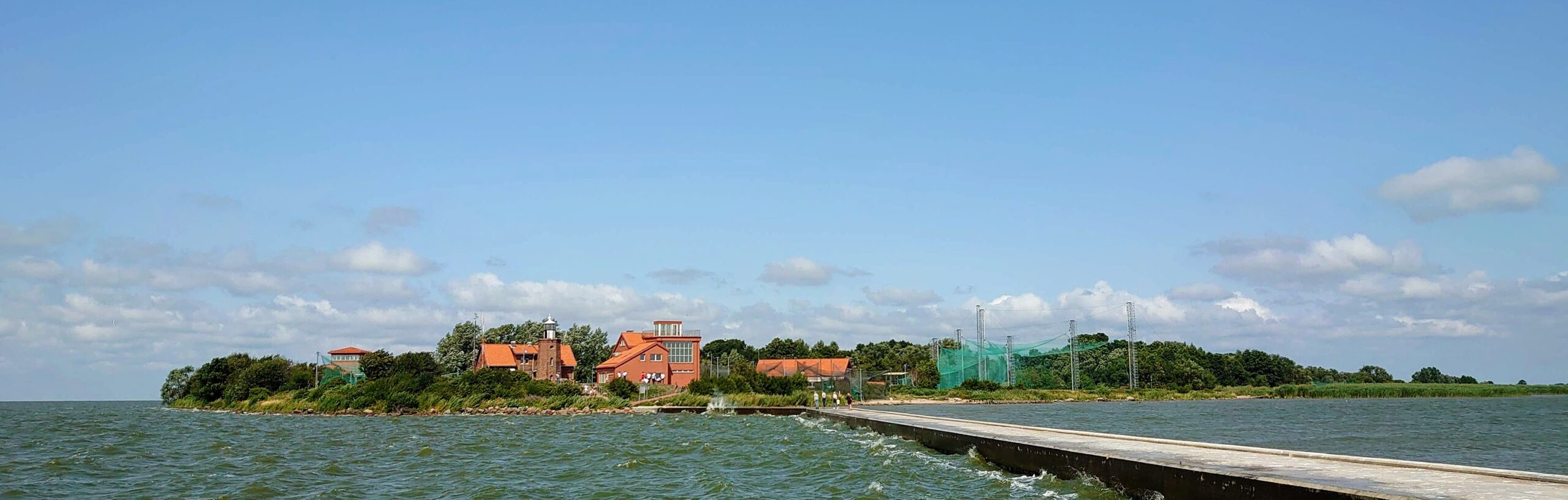
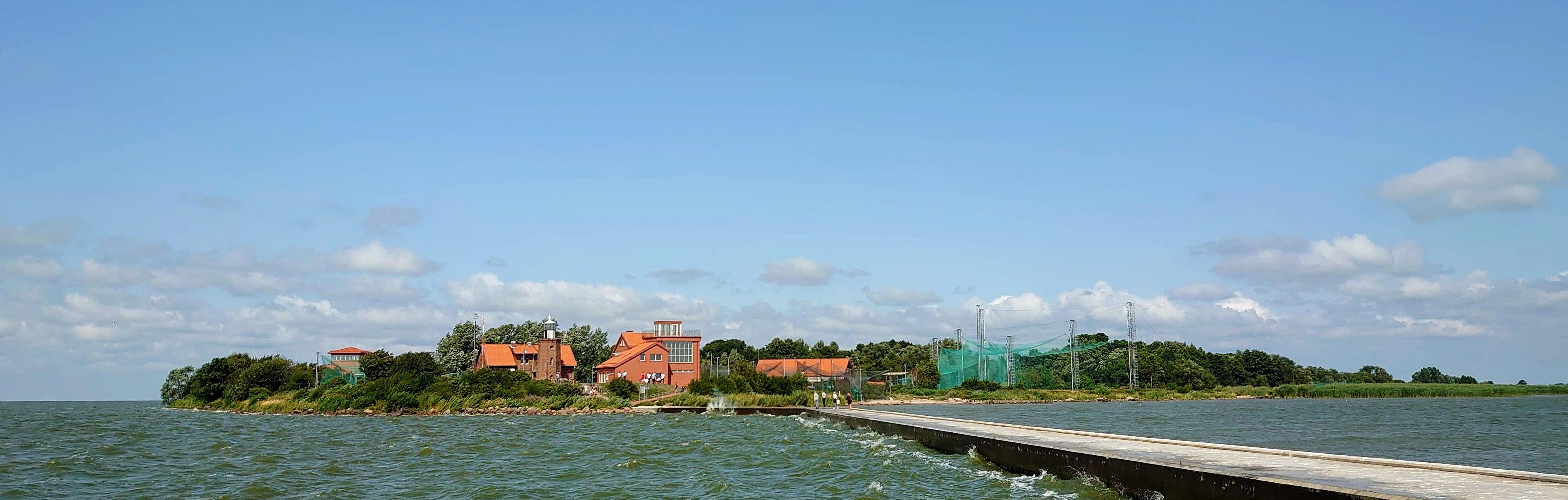
Ventė neeme ornitoloogiajaam. Esiplaanil on 1863. aastal ehitatud majakas. (c) Elle-Mari Talivee
Nemunase delta on kahtlemata rändlindude kuningriik. Maigu sellest, mis võib seal toimuda kevadel ja sügisel, saab suhu juuliski. Kevadel ujutab suurvesi jõeluhad üle ja küladest saavad saared. Suvel saab harujõgedel aga laevukesega sõita ning sanglepad seisavad kaldal nagu mangroovid. Vees seisavad hall- ja hõbehaigrud, sulistavad laugud ja taidad ning lugematud pardipered, okstel istuvad kormoranid. Heinamaadel ehmatab mööduja hetkeks sookurgi ning hanesid. Igasse majapidamisse kuulub valge-toonekure pesa. Loorkullid heljuvad nagu tuulelohed. Kuldnokad kogunesid põldudel. Infotahvlitelt saab teada, keda kõike näeks siin kevadel. Sügis on aga parim aeg pisikeste rändurite kohtamiseks. 1929. aastal Ventė neemel avatud linnujaamas[1] (hiljuti renoveeritud jaamas on nüüd ka muuseum) võib südasuvelgi näha maailma suurimat linnupüünist – hiilaslikku Helgolandi tüüpi rüsa, mille abil saavad igal aastal rõnga jalga tuhanded linnud ja nahkhiired. Linde püüti suveuniselt juuliski. Vähemalt Leedus näis pääsukestega kõik hästi olevat: linnujaama räästaalune oli kenasti suitsu- ja räästapääsukeste pesi täis ehitatud.
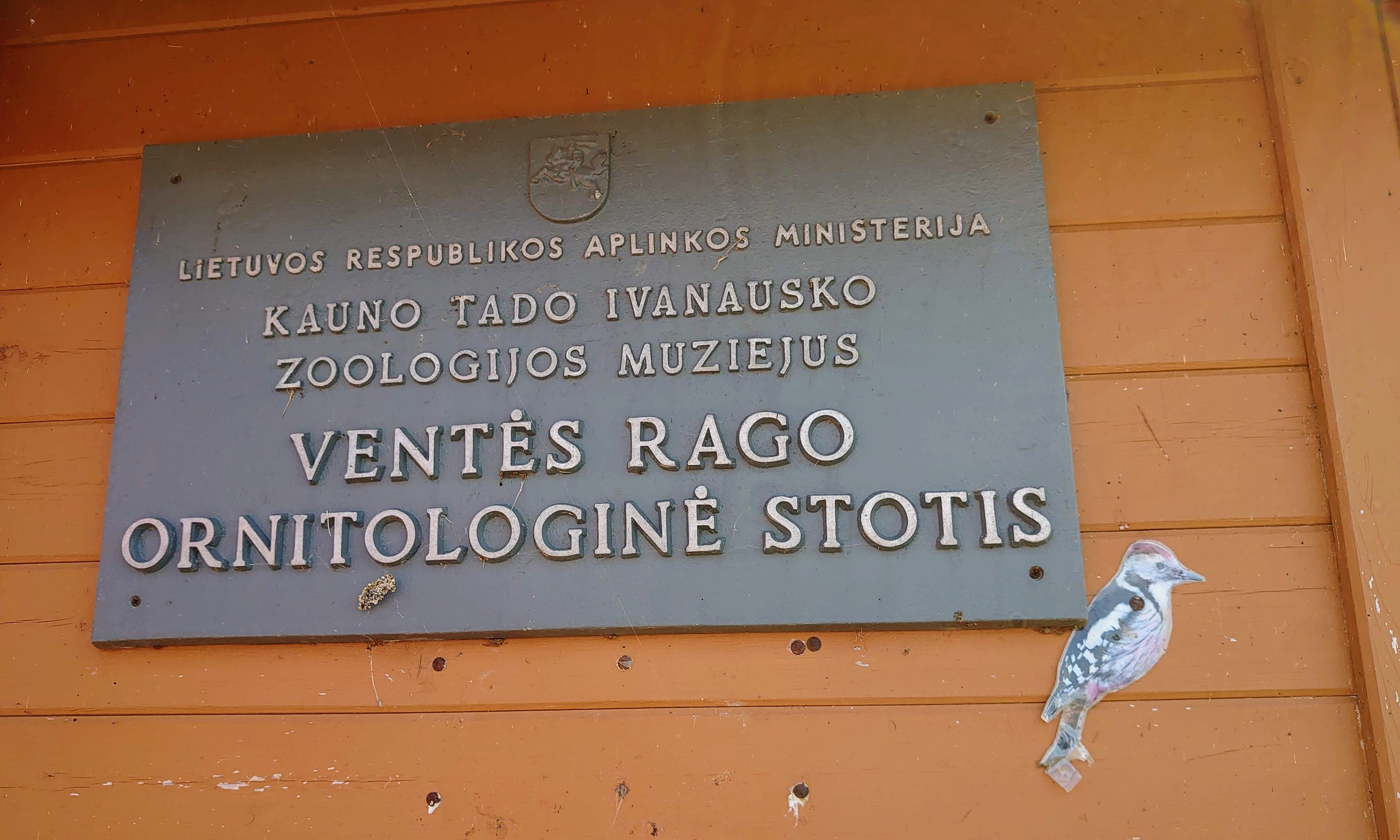
Ornitoloogiajaam on Kaunases asuva zooloogiamuuseumi haru – zooloog Tadas Ivanauskase poolt rajatud muuseum tegeleb nii loodushariduse kui ka uurimistööga. (c) Elle-Mari Talivee
Seisin Ventė pisikese majaka tornis ja igatsesin tiibu endalegi: üle Kura lahe, ent teispool piiri Kaliningradi oblastis asub maailma vanim linnujaam Vogelwarte Rossitten, mis praegu kannab nime Rõbatši.[2] 1901. aastal asutas selle Saksa ornitoloog Johannes Thienemann. Koroona-maailmas sinna igatahes ei saa.
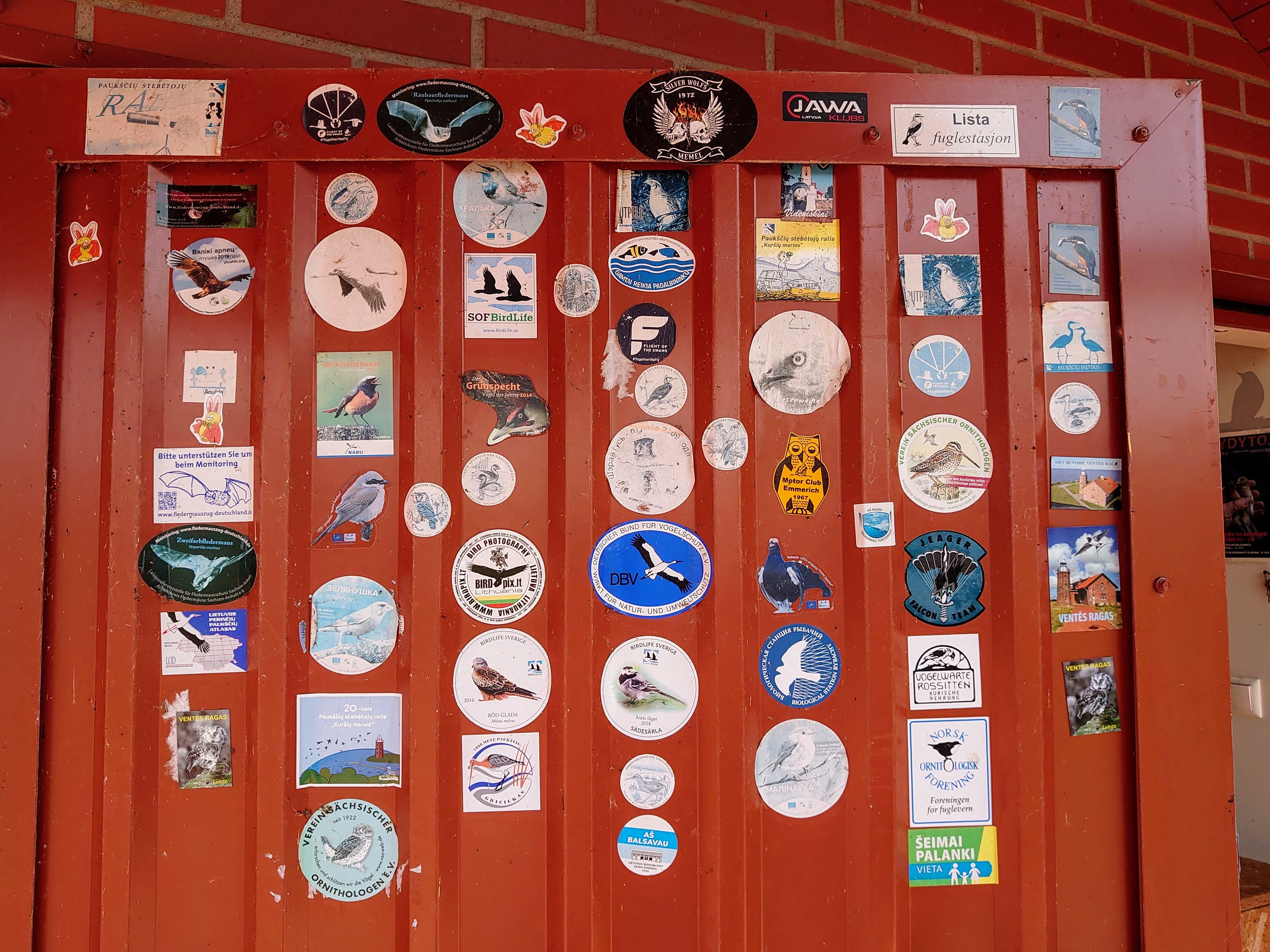
Külalised teiste maade linnuhuviliste ühingutest on jaama uksele kleepinud oma sümboleid. Järgmisel korral lubasin siia tuua ka Eesti Ornitoloogiaühingu oma. (c) Elle-Mari Talivee
Nida poolsaare Leedu poolel Neringas asub samuti linnujaam, kus linde püütakse sügisel.[3] Palangast kohe üle piiri Lätis asub aga 1966. aastal avatud Pape linnujaam.[4] Papes kasutati algul loorvõrke, siis saadi Rõbatšist kingiks püünis ning praegu pannakse sügisel üles Helgolandi tüüpi rüsa. Papes olid bioloogiaüliõpilased juba loorvõrkude juures valves. Nagu mujal, püütakse siingi lisaks rändlindudele nahkhiiri.
Puhkajana tahaksin nentida, et kõik nimetatud sihtmärgid on ideaalsed ka suvitajale: ehkki linde näeb suvel vähem, saab ujuda nii meres, Kura lahes kui ka Nemunase deltas, ning vähemalt korraks võib laenata linnusilma: nimelt üles Nida poolsaare kuni 60 meetri kõrgustele liivaluidetele ronides. Kunagi suvitas Nidas Thomas Mann.
Uuesti põhja kodu poole rändama hakates – vastu juba tasahilju lõunamaale mõtlevatele rändlindudele – võib nentida, et Läänemere rannikut pidi rändavad värvulised ja nahkhiired, kes Eestis Kabli linnujaamas ei saa omale jalga rõngast kirjaga ESTONIA MATSALU, võivad valida lõuna poole jõudes näiteks Pape, Neringa, Rõbatši ja muidugi Ventė vahel.